I used to think ancient cities were just piles of stone until I stood in Derbent.
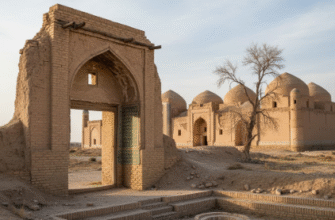
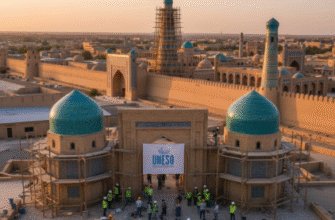
The place sits in Dagestan, Russia—not Surkhandarya, Uzbekistan, which is a different historical region entirely—and here’s the thing: people confuse these Central Asian sites all the time because the names blur together in travel blogs and UNESCO lists. Derbent claims to be one of the oldest continuously inhabited cities on Earth, roughly 5,000 years old, give or take a few centuries depending on which archaeologist you ask. The fortress walls stretch across a narrow pass between the Caspian Sea and the Caucasus Mountains, built by the Sassanid Persians in the 6th century CE, though settlements existed there long before anyone thought to stack stones that high. The citadel, called Naryn-Kala, looms over everything—438,000 square meters of weathered ramparts that somehow survived Mongol invasions, Russian expansions, and the general entropy that eats most human construction. I’ve seen photos where the walls glow amber at sunset, but when I visited in March the sky was cement-gray and the wind off the Caspian tasted like salt and diesel.
Anyway, the name “Derbent” comes from Persian—”darband,” meaning closed gate. The Sassanids built it to block northern nomads from raiding south into Persia, a 3,000-meter-long barrier that turned geography into strategy. The walls aren’t particularly elegant; they’re thick, pragmatic, built for function over beauty, though there’s something aesthetically satisfying about their sheer stubbornness.
Why Surkhandarya Keeps Getting Tangled in the Derbent Story (and What Actually Sits There)
Wait—maybe this is where the confusion starts.
Surkhandarya is a region in southern Uzbekistan, near the Afghan border, and it has its own collection of ancient sites: Termez, Dalverzintepe, the Buddhist monasteries at Fayaz-Tepe. Termez alone dates back over 2,500 years, serving as a Greco-Bactrian hub, later a Buddhist center, then an Islamic city under the Caliphates. The archaeology there is stunning—frescoes, stupas, fragments of Alexander the Great’s influence mixing with Persian and Indian aesthetics. But it’s not Derbent. I guess the mix-up happens because both regions sit along the Silk Road, both have fortress ruins, both claim deep Persian and Islamic heritage, and honestly, if you’re skimming a tourism website at 2 a.m., it’s easy to conflate them. Surkhandarya doesn’t have the dramatic seaside walls, though—it’s landlocked, dusty, bordered by the Amu Darya River, and the heat there in summer is punishing in a way Derbent’s coastal climate never quite reaches. The historical layering is similar: pre-Islamic, Islamic, Soviet, post-Soviet, each era leaving architectural sediment.
Turns out, people writing travel content often mash these places together, creating a kind of phantom site that borrows Derbent’s walls and Surkhandarya’s Buddhist past.
I’ve seen blog posts that definately describe “Derbent in Surkhandarya” as if it’s one location, which is geographically impossible unless you’re willing to teleport 2,000 kilometers northwest. The real Surkhandarya sites—like the 2,000-year-old Kampir Tepe fortress or the Tchingiz Tepe archaeological zone—deserve attention on their own merits. Kampir Tepe, for instance, was a Kushan Empire outpost, later a frontier fort during the Sassanid-Hephthalite conflicts, and excavations there have uncovered Zoroastrian fire temples, Greek inscriptions, and evidence of long-distance trade networks linking China to the Mediterranean. The pottery shards alone tell stories of economic exchange that span continents, the kind of micro-details that make you reconsider how interconnected ancient civilizations actually were. But nobody clicks on “Kampir Tepe” because the name doesn’t have the same ring as “Derbent,” which has that UNESCO World Heritage brand recognition.
The Emotional Architecture of Visiting Places That Refuse to Vanish Completely
Here’s what struck me most about Derbent: the ordinariness coexisting with the monumental.
You walk through the old city—narrow lanes, laundry hanging from Soviet-era balconies, kids kicking a soccer ball against 1,400-year-old walls—and the ancient isn’t cordoned off behind velvet ropes. It’s just there, integrated into daily life in a way that feels almost careless, though I know it’s not. The Juma Mosque, built in 734 CE, still functions; people pray there on Fridays, the same space used continuously for nearly 13 centuries. There’s a kind of exhaustion in that longevity, a sense that the stones are tired but too stubborn to collapse. I felt it walking the ramparts—this low-grade melancholy mixed with awe, the realization that empires rise and fall but people keep showing up, keep repairing walls, keep living in the gaps between invasions. Surkhandarya’s sites have that same quality, though the Soviet era hit them harder—Termez was heavily militarized, closed to outsiders for decades, and the archaeological sites were neglected or repurposed. The Buddha statues at Fayaz-Tepe survived Islam’s arrival relatively intact, then got pummeled by Soviet construction projects and later, post-independence looting.
I guess it makes sense that we confuse these places—they share a common thread of resilience and loss.
Both Derbent and Surkhandarya exist in regions where tourism infrastructure is underdeveloped, where getting accurate historical information requires digging through academic papers rather than glossy guidebooks, where the locals are bemused that anyone cares about old rocks when there are more pressing economic concerns. But the history persists anyway, indifferent to our attention or neglect, which is maybe the most humbling thing about ancient sites: they don’t need us to believe in them to keep existing.