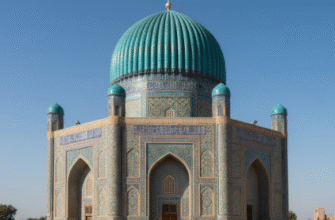
Standing in front of Registan Square at dawn, watching the tiles shift from midnight blue to turquoise as the sun hits them—well, it’s the kind of thing that makes you understand why people used to think certain places were blessed by gods.
I’ve been to maybe a dozen historic squares across Central Asia, and honestly, none of them prepare you for this. The thing about Registan is that it’s not just one building but three massive madrasahs—Islamic schools, essentially—arranged in a U-shape that was designed sometime in the 15th century to, I guess, intimidate the hell out of anyone approaching Samarkand. The Ulugh Beg Madrasah went up first around 1420, then the Sher-Dor maybe two centuries later, and finally the Tilya-Kori, which they finished in 1660 or thereabouts. Each one is covered in these geometric patterns and calligraphy that seem to ripple when you’re tired, like your brain can’t quite process that much visual information at once. The courtyard between them is huge—something like 300 feet across, give or take—and it used to be a marketplace where traders from the Silk Road would hawk everything from Chinese silk to Indian spices. Now it’s mostly tourists and local families taking wedding photos, which, wait—maybe that’s its own kind of continuation of public life.
Here’s the thing: the best time to visit is either right when it opens at 8 AM or around sunset, because midday in summer the heat bouncing off that stone courtyard is genuinely punishing. I used to think I could handle Central Asian summers, but standing there at noon in July disabused me of that notion pretty quickly.
What You’ll Actually Need to Know Before Going (And What the Guidebooks Get Wrong)
Tickets cost around 40,000 som as of early 2025, which is roughly eight US dollars—not bad for a UNESCO World Heritage site. But here’s what nobody tells you: that ticket only gets you into the courtyard and the ground floors of the madrasahs. If you want to climb the minarets or see the second-floor museum rooms in Tilya-Kori, you’ll need to negociate with the guards, and sometimes they’ll let you up for an extra tip, sometimes they won’t, depending on restoration work. It’s arbitrary and mildly frustrating, honestly. The complex is open every day from 8 AM to around 10 PM during summer months, though the interior rooms close earlier, maybe around 7 PM. Winter hours are shorter—closer to 8 AM to 6 PM—because, turns out, fewer people want to wander around an open plaza when it’s below freezing.
Photography is allowed everywhere, which is a relief.
The Sher-Dor Madrasah has these famous lion mosaics on its facade—except they’re not quite lions, more like weird cat-creatures with human faces and sun disks, which technically violated Islamic artistic conventions against depicting living beings, but the ruler at the time apparently didn’t care. I’ve seen some tour guides claim they represent Zoroastrian symbols blending with Islamic art, others say it was just the architect showing off. Nobody seems to know for sure, and I guess that ambiguity is part of why the place feels so alive—it refuses to be perfectly categorized. Inside, most of the rooms have been converted into craft shops selling suzani textiles and ceramics, which feels simultaneously touristy and weirdly appropriate, since these were educational institutions that also functioned as economic centers.
The Practical Stuff That Makes or Breaks Your Visit to This Architectural Marvel
Getting there is straightforward if you’re staying anywhere in central Samarkand—it’s walkable from most hotels, maybe 15-20 minutes from the Bibi-Khanym Mosque area. Taxis are cheap, around 10,000 som from the train station. There’s no real dress code enforced, but covering shoulders and knees is respectful, especially if you want to peek into the prayer spaces that are occasionally still used. Bring water, because there’s only one overpriced vendor inside the square, and the closest cafes are a few blocks away on Registan Street, where you can get decent plov for maybe 25,000 som. The sound-and-light show they run some evenings is—look, it’s cheesy, projecting lasers onto 600-year-old tiles feels wrong to some people, but if you’re there anyway and tickets are only another 50,000 som, it’s kind of spectacular in a gaudy way. The whole experience lasts about 40 minutes and they narrate Uzbek history in multiple languages, though the English audio is, let’s say, charmingly imperfect. Anyway, whether you spend an hour or half a day there depends on your tolerance for crowds and heat, but leaving without sitting in the courtyard for at least twenty minutes, just watching the light change on those domes, would be missing the point entirely.