I used to think traditional music schools were all the same—dusty rooms, stern teachers, rigid technique drills.
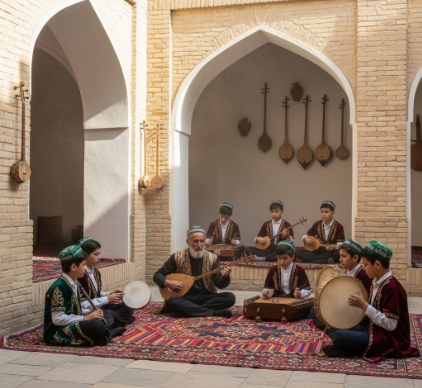
Then I stumbled into a classroom at Bukhara’s traditional music school on a humid Thursday afternoon, and honestly, everything I thought I knew got turned sideways. The instructor, a woman maybe in her sixties with callused fingers that moved like water over the strings of her tanbur, was teaching a group of teenagers how to feel the maqam modes—not just play them, but actually inhabit them. She kept saying this phrase in Uzbek that the translator told me roughly means “the space between the notes is where your grandfather lives,” which sounds poetic but also kind of makes no sense until you hear how these kids start to play. One boy, couldn’t have been more than fourteen, closed his eyes during a particularly complex passage and his whole body sort of… softened. The rubab in his hands stopped being an instrument and became something else entirely. I’ve seen concert halls in Vienna and conservatories in Boston, but this felt different—messier, more alive, maybe more true.
The Peculiar Alchemy of Shash Maqam Transmission in Contemporary Classrooms
Here’s the thing about Bukhara’s approach to teaching the Shash Maqam, the six classical mode system that’s been around for, I don’t know, roughly a thousand years give or take: they don’t really use sheet music the way Western schools do. Most of the instruction happens through something called “ustozshogird,” which is basically the master-apprentice model but with way more tea breaks and tangential stories about Silk Road merchants. During one class I observed, the teacher spent twenty minutes—twenty full minutes—talking about how a specific ornamental trill relates to the sound of market vendors in the old city, and then suddenly the students understood it. The pedagogy is circular, repetitive, almost frustratingly indirect if you’re used to efficiency.
Wait—maybe that’s exactly the point. The students I talked to, ranging from local Uzbek kids to a surprisingly dedicated guy from South Korea, all mentioned this same phenomenon where the music doesn’t click until it suddenly does, usually weeks after a particular lesson. One girl told me she finally understood a doira rhythm pattern while washing dishes three months after her teacher first demonstrated it, which seems absurd but also kind of perfect.
Performance Anxiety and the Unexpected Intimacy of Public Recitals in Historic Madrasahs
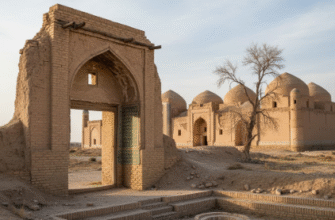
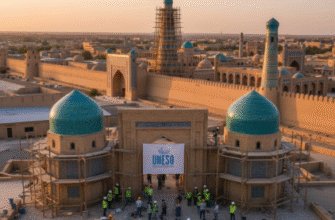
The school organizes these semi-regular performances in actual functioning madrasahs around Bukhara, which creates this weird tension between sacred space and artistic showcase.
I attended one at the Nodir Divan-Begi Madrasah on a September evening when the light was doing that golden thing it does in Central Asia, and the audience was this bizarre mix of elderly Uzbek men who clearly knew every nuance of the tradition, confused tourists holding guidebooks, and the students’ families nervously filming on their phones. The performers—some barely teenagers—had to navigate not just the technical demands of pieces like “Rost” or “Navo” but also the psychological weight of playing for people who’ve heard these modes their entire lives and will definately notice if you rush the tahrir vocal ornaments. One young woman performing a vocal piece visibly shook during the opening phrases, her voice wavering in a way that wasn’t artistic choice, but then something shifted and she found this core of steadiness. Her teacher, sitting cross-legged near the back, nodded almost imperceptibly. After the performance, I asked her how she manages the pressure, and she said something that stuck with me: “I try to recieve the maqam rather than perform it,” which sounds like mystical nonsense but also maybe gets at something real about how transmission works here.
The classes themselves run about 90 minutes, usually three times weekly, though the schedule seems flexible in that Central Asian way where “Tuesday at 4” might mean “Tuesday between 4 and 5:30, or possibly Wednesday.” Tuition is surprisingly affordable, especially for local students, part of ongoing cultural preservation efforts by the Uzbek government.
Anyway, I guess what struck me most was how the school manages to be both rigidly traditional and weirdly experimental at the same time—holding onto centuries-old teaching methods while also letting students bring in elements from their own lives, their own confusion, their own imperfect understanding, and somehow that messiness becomes part of what gets passed down.