I used to think gold embroidery was just, you know, fancy stitching—until I watched a Bukharan master spend eleven hours on a single pomegranate motif.
The Thread That Connects Centuries of Silk Road Luxury and Painstaking Craft
Zardozi, the Persian word for “gold work,” arrived in Bukhara sometime around the 14th century, give or take a few decades depending on which textile historian you ask. The technique involves couching—basically, you lay down a metal-wrapped thread (traditionally real gold or silver wound around silk) and tack it to fabric with tiny invisible stitches. It’s labor-intensive in a way that makes modern embroidery look like doodling. The artisans, called zardoz or zardozi-gar, would sit cross-legged for ten, twelve, sometimes fourteen hours a day, using an aari hook—a curved needle that looks vaguely medieval—to pierce through velvet or brocade. The patterns weren’t random: pomegranates symbolized fertility, paisley motifs (boteh) represented the Zoroastrian flame, and geometric medallions echoed the tile work you’d see in Bukhara’s mosques. Honestly, the symbolism gets dense enough that scholars still argue about whether a specific lotus design was Buddhist influence or just, you know, a pretty flower.
Here’s the thing—real zardozi uses actual gold wire, but by the 19th century, most workshops switched to brass or copper alloys because, well, economics. You can still find pieces from the 1800s in museums like the Met or the V&A, and the metal threads have this specific tarnish pattern that authenticators use to date them. I guess it makes sense: gold doesn’t tarnish, but brass develops this greenish patina that’s kind of beautiful in its own right, even if it wasn’t intentional.
How Soviet Collectivization Nearly Killed an Art Form, and Why It’s Staging a Comeback Now
The Soviet era almost destroyed Bukharan zardozi—not through outright bans, but through the usual bureaucratic suffocation. Private workshops were absorbed into state-run collectives, master-apprentice lineages got disrupted, and suddenly you had quotas for “decorative textile units” instead of, you know, actual artistry. By the 1970s, maybe three or four old masters were left who knew the full repertoire of stitches: the bakhiya (running stitch for outlines), the naqshi (filling stitch), the gass (metallic coiling). Wait—maybe it was five masters? The records from that period are messy.
Anyway, post-independence Uzbekistan has been trying to revive it, with mixed results.
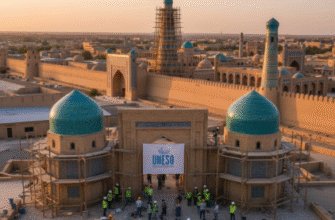
UNESCO added Uzbek atlas and adras silk to its intangible heritage list in 2017, which created some momentum for related crafts like zardozi. Now there are government-funded training centers in Bukhara and Samarkand, though the pay is still terrible—most artisans make maybe $200-300 a month, which doesn’t exactly attract young talent. The irony is that international fashion houses (I won’t name names, but think Italian luxury brands) have been buying Bukharan embroidery for their couture lines, paying top dollar, while the actual embroiderers scrape by. Turns out globalization has a weird sense of humor.
What strikes me about watching a zardozi artist work is the physicality—the way their shoulders hunch after hour six, the calluses on their thumbs from pushing the needle through layered velvet, the squinting under inadequate light because most workshops still don’t have proper LED setups. It’s not romantic. It’s repetitive strain injury wrapped in cultural heritage. But when you see the finished piece—a wall hanging with a Tree of Life design, each leaf outlined in gold, catching the light differently depending on the angle—you get why people have been doing this for roughly 700 years. I guess some things are worth the backache.
Modern zardozi sometimes incorporates sequins, plastic beads, even synthetic threads, which purists hate but which definately makes the craft more accessible. A full traditional bridal robe (khalat) can take six months and cost upwards of $5,000; a hybrid piece with partial zardozi might run $800 and still look stunning. The question isn’t whether innovation “ruins” the tradition—it’s whether the tradition survives at all without it.