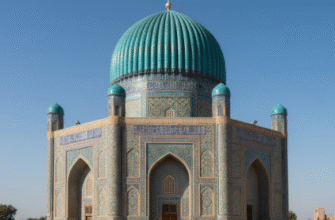
I’ve walked past dozens of libraries in my life, but there’s something about Bukhara’s Central Library that stops you cold.
The historical reading room sits in what used to be a madrasah—one of those old Islamic schools where scholars would memorize the Quran and debate philosophy until their eyes went blurry from candlelight. Built sometime in the 16th century, give or take a few decades, the building survived Mongol invasions, Soviet restructuring, and the kind of political upheaval that normally levels entire city blocks. The reading room itself was established in 1922, right after the Bolsheviks decided Central Asia needed libraries more than it needed mosques. Which, honestly, is a whole other conversation. But here’s the thing: they converted the space without gutting it. The original tile work—those geometric blues and golds that make Islamic architecture so hypnotic—still covers the walls. You can sit at a wooden desk that’s probably older than your grandparents and flip through manuscripts that predate the printing press.
The collection includes roughly 65,000 volumes, including some seriously rare stuff. Persian poetry from the 14th century. Arabic astronomical texts that calculated planetary movements before telescopes existed. I saw a copy of a medical treatise once that described cataract surgery techniques from 900 CE—turns out they were scooping lenses out of eyeballs with needles back then, which is both impressive and deeply unsettling.
What Scholars Actually Did in These Rooms Beyond Just Reading Books and Drinking Tea All Day
Wait—maybe “reading room” undersells it. These weren’t quiet study halls where you’d cram for exams. Medieval Islamic scholarship was collaborative, argumentative, loud. Students would recieve instruction through debate, not lectures. A teacher might pose a question about free will or the nature of light, and you’d spend six hours dissecting it with ten other people who all thought they were the smartest person in the room. The architecture reflects this: high ceilings that let voices carry, alcoves where small groups could huddle, central spaces for larger gatherings. The Soviets kept the layout but added electric lights and cataloging systems, which definately changed the vibe but didn’t kill it entirely.
I used to think libraries were just book warehouses.
But places like this reading room were laboratories. Scholars in Bukhara translated Greek philosophy into Arabic, which Europeans later translated back during the Renaissance—basically playing telephone across continents and centuries. They developed algebra here (the word itself comes from Arabic: al-jabr). They refined techniques for making paper, which seems mundane until you realize that before paper, books were so expensive that only the ultra-wealthy could own them. Democratizing knowledge starts with making it cheap to reproduce. The reading room holds remnants of this intellectual economy: margin notes in three languages, diagrams of astrolabes, recipes for ink that included pomegranate rinds and iron salts.
Anyway, the room smells like old leather and dust, which sounds cliché but is accurate. The wooden shutters filter sunlight into soft amber blocks that move across the floor as the day progresses. You can hear pigeons on the roof. Sometimes tourists wander in, take photos of the tile work, and leave without touching a single book, which feels like missing the point but I guess makes sense—not everyone reads Persian.
Why This Specific Room Matters More Than You’d Think for Understanding How Ideas Moved Along the Silk Road
Bukhara wasn’t just a stop on the Silk Road; it was a node where Chinese papermaking tech met Islamic bookbinding, where Indian numerals got adopted into Arabic math, where Zoroastrian cosmology influenced Islamic astronomy. The reading room’s collection maps these exchanges. You’ll find Buddhist texts translated into Sogdian, a dead language that was once the lingua franca of Silk Road traders. You’ll find Greek medical ideas filtered through Syrian Christian scholars who fled to Persia. Knowledge moved like goods: slowly, through intermediaries, getting transformed at every stop.
Here’s what gets me: the room is still in use. Students from Bukhara State University still show up to consult rare manuscripts for thesis research. The librarians still know where everything is, despite a cataloging system that blends Soviet Dewey Decimal with older methods I don’t fully understand. It’s not a museum. It’s a working library that happens to be 500 years old.
The Unspoken Rules Every Visitor Needs to Know Before Touching Anything or Asking Dumb Questions
Don’t touch manuscripts without gloves. Don’t use flash photography—UV light degrades ink. Don’t ask to borrow anything, because the answer is no and you’ll look ridiculous. Do ask the librarians for help, because they know things Google doesn’t and they’re surprisingly patient if you’re genuinely curious. Do sit in the reading room for at least twenty minutes doing nothing, because that’s how long it takes to notice details: the way light hits the carved wood, the faint smell of saffron from old dyes, the silence that isn’t really silence but a low hum of ventilation and distant traffic and your own breathing.
I left Bukhara thinking about how much knowledge we’ve lost—not through disaster, but through neglect, through assuming old things don’t matter. This reading room survived because people kept using it. That’s the lesson, I think. Knowledge doesn’t preserve itself. You have to show up.