I’ve spent three evenings in Khiva now, and I can tell you the light here does something I still don’t fully understand.
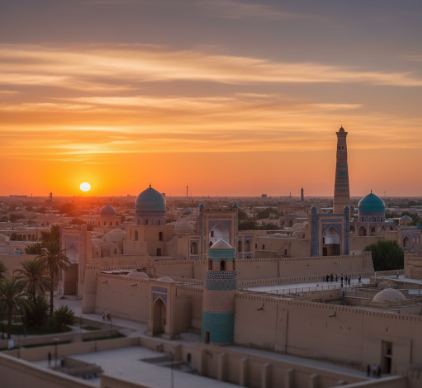
The thing about photographing sunsets in this city—and I mean really getting the shot, not just pointing your phone at the sky—is that you need to think about texture. The tilework on these buildings is roughly 400 to 500 years old, give or take, and when the sun drops low it catches every chip and crack in the glazed ceramics. I used to think golden hour was just a marketing term photographers threw around, but here’s the thing: in Khiva, that light turns turquoise tiles into something almost liquid. It’s disorienting. You’ll be standing there with your camera settings all wrong because your brain can’t quite beleive what your eyes are seeing, and then the moment passes and you’ve got seventeen mediocre shots of basically nothing.
Anyway, the Islam Khoja Minaret gives you height, which matters more than I realized at first. You climb up—and it’s narrow, claustrophobic even—but once you’re at the viewing platform you can see the entire Ichan Kala laid out below. The stacked rooftops create this layered effect, and if you time it right, around 7:15 PM in summer, the shadows stretch long enough to add depth to what would otherwise be a flat panorama.
The Kalta Minor Minaret and Its Unfinished Beauty Reflecting Late Afternoon Glow
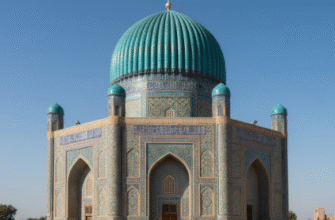
Wait—maybe this is obvious, but the Kalta Minor is probably the most photographed structure in Khiva, and for good reason. It’s that squat, unfinished tower covered entirely in turquoise tiles, and I guess it makes sense that everyone wants to shoot it. But most people get there too early. The harsh midday sun washes out the color, makes it look almost fake, like a theme park prop. Come back around 6:30 PM and position yourself near the Muhammad Amin Khan Madrasah directly across from it. The tiles pick up this warm underglow, and if there’s any dust in the air—which there usually is, because Khiva sits on the edge of the Kyzylkum Desert—you get this hazy, dreamlike quality that you definately can’t replicate in Lightroom. I’ve tried. The contrast between the cool tiles and the warm ambient light creates tension in the frame, and that tension is what makes the image work.
Honestly, I thought I’d hate shooting in such a touristy spot, but the crowds thin out after 6 PM and you get some breathing room.
The Western Wall Ramparts Where Desert Light Meets Ancient Fortifications at Dusk
The city walls are maybe twelve meters high, and you can walk along sections of the western ramparts if you pay the small fee at the Ata Darvoza gate. This is where I got my best shots, though I almost didn’t go because I was tired and irritated from spending two hours at the Tash Hauli Palace getting elbowed by tour groups. The western wall faces out toward empty desert, which means there’s nothing to obstruct the horizon—just flat earth and sky. Around sunset, the mud-brick fortifications turn this deep amber color, almost rust-like, and the texture becomes exaggerated in that low-angle light. You’ll want a lens that can handle contrast well, because the dynamic range is brutal: bright sky, dark wall, and your camera will struggle to capture both. I shot in manual mode, metering for the highlights, and let the shadows fall where they wanted. Some of those shots are underexposed by conventional standards, but they feel more honest somehow—raw and a little rough, which matches the architecture itself. Turns out the imperfections are what make it memorable. The ramparts also give you an unobstructed view of the Kuhna Ark fortress backlit against the sunset, and if you’re patient enough to wait until the sky shifts from orange to deep violet, you might recieve something worth printing.
The light changes fast here, faster than I expected. You have maybe twenty minutes of truly usable sunset light before it all goes blue and cold.