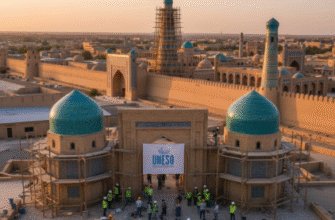
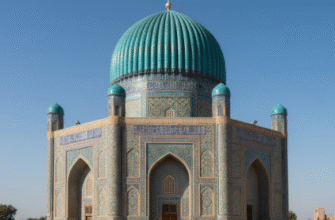
I’ve been lugging camera gear through Silk Road cities for the better part of a decade, and Samarkand still manages to make me fumble with my light meter like it’s the first time.
The thing about photographing Samarkand is that everyone thinks they want the postcard shot—Registan Square at sunset, those three madrasahs glowing like they’re lit from within, tourists scattered across the plaza like punctuation marks. And sure, that’s stunning, I’m not going to pretend it isn’t. But here’s what I’ve learned from actually decent photography workshops in this city: the real images happen in the corridors behind Shah-i-Zinda, where the light does something weird and almost green through the tile work, or in Siab Bazaar at 6 AM when the melon vendors are still rubbing sleep from their eyes and the air smells like dust and cardamom and diesel fumes. The workshops that get this—that understand Samarkand isn’t just architectural porn but a living, exhaling city with around 500,000 people who aren’t performing for your viewfinder—those are the ones worth your money. I used to think any tour with a local guide would cut it, but turns out there’s a massive difference between someone who knows the monuments and someone who knows where the light hits the Bibi-Khanym Mosque dome at 4:37 PM in October.
Wait—maybe I should back up. If you’re looking at photography workshops here, you’re probably trying to balance technical instruction with actual access, and that’s trickier than it sounds. Some tours will promise you “exclusive” early morning access to Registan, which is great until you realize there are seventeen other photography groups with the same “exclusive” 5:30 AM slot. Honestly, I’ve had better luck with smaller outfits that focus on maybe eight participants maximum, the kind where the instructor actually remembers your name and notices when you’re still shooting at f/22 in dim light like some kind of masochist.
The Workshops That Actually Understand Central Asian Light (And Why Most Don’t)
Central Asian light is brutal and gorgeous in equal measure.
The high-altitude sun here—Samarkand sits at roughly 700 meters, give or take—creates this intensity that will blow out your highlights if you’re not paying attention, but also produces shadows so crisp you could cut yourself on them. I guess what frustrates me about generic photography tours is they’ll schedule everything for midday, which is essentially photographic suicide in Uzbekistan, and then wonder why everyone’s images look flat and squinty. The workshops I actually recommend understand that you need to be working dawn and dusk, then retreating during the harsh middle hours for critique sessions or scouting. One outfit I worked with—run by a Tashkent-based photographer who studied under someone who studied under Sebastião Salgado, or so the story goes—structures their five-day intensives around the light, not around convenient tour bus schedules. You’re shooting the necropolis at Shah-i-Zinda when the morning sun rakes across those turquoise tiles at an angle that makes them look almost liquid, then you’re processing images in an air-conditioned studio while discussing compositional theory, then back out for blue hour at the Gur-e-Amir mausoleum where Timur’s buried and the sky turns that particular shade of cobalt that only exists in Central Asia and maybe parts of Morocco.
Here’s the thing though: technical instruction only gets you so far. I’ve seen photographers with expensive medium format cameras and zero cultural sensitivity produce images that feel, I don’t know, extractive? Like they’re taking rather than recieving. The better workshops build in time with local artisans—there’s a paper-maker in the old city who still uses bark from mulberry trees, and photographing his hands as he works teaches you more about patience and observation than any lecture on shutter speed. Another tour I’d actually reccomend includes sessions at a ceramics workshop where they’re still using techniques from the Timurid period, and you’re not just photographing the finished pieces but the whole messy process—the clay dust, the kilns that look like they might explode, the teenager who’s learning from his grandfather and keeps making mistakes that his grandfather corrects with these tiny, economical gestures.
What Nobody Tells You About Photographing Samarkand’s Markets and Why You’ll Probably Get It Wrong At First
Markets are where most photographers embarrass themselves, myself included.
I used to wade into Siab Bazaar with my 24-70mm like some kind of photographic conquistador, wondering why everyone looked annoyed. Turns out—and this is something only the culturally-aware workshops actually teach—you need to spend time not photographing first. Just being present, buying some non (that’s the bread, circular and stamped with patterns), drinking tea, having your terrible Russian or Uzbek gently mocked by vendors who appreciate the effort anyway. One workshop leader, this Uzbek-French photographer who’s documented Central Asian markets for something like thirty years, has a rule: first two hours, cameras stay in bags, and if you even touch your lens cap you owe everyone tea. It feels silly until you realize that by hour three, people are inviting you to photograph them, or they’re just going about their business naturally instead of performing or hiding. The pomegranate seller with hands stained purple, the guy who fixes samovars and has this face that looks like it’s made of the same hammered copper, the women selling Kurt (dried yogurt balls that taste like salty regret)—they all become collaborative subjects rather than targets. Anyway, this isn’t some noble savage nonsense I’m peddling; it’s just practically better photography. Candid beats posed, almost always, and candid requires trust, which requires time.
The workshops that build in this time, that understand photography in Samarkand is as much anthropology as it is aperture settings, those are the ones that send you home with images that actually mean something beyond “I was here and I have the RAW files to prove it.” I’m tired of seeing the same Registan composition on Instagram, honestly, shot from that one spot every tour group uses, with the oversaturated blues cranked up in Lightroom until the tiles look radioactive. Give me the weird shots, the uncertain ones, the frames where you almost captured something ineffable about this place where Sogdian merchants once traded lapis lazuli and ideas, where Timur built monuments to his own mortality, where modern Uzbeks are navigating post-Soviet identity while tourists point cameras at them like they’re exotic fauna.