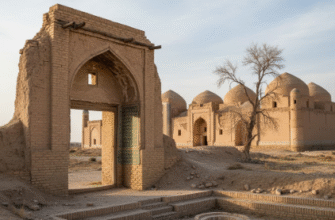
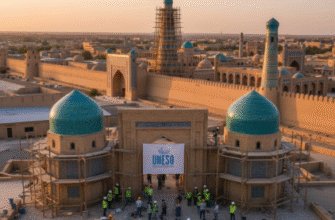
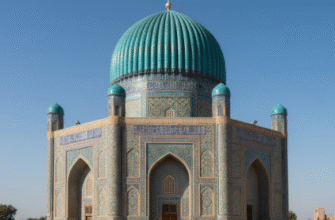
I used to think Uzbekistan was all about the Silk Road architecture—you know, the turquoise domes and intricate tilework that flood your Instagram feed.
Turns out, the country’s got this whole other personality that most travel guides barely mention, and it’s the kind of thing that makes you reconsider everything you thought you knew about Central Asian adventure. The Nuratau Mountains stretch across something like 170 kilometers of northern Uzbekistan, and when I first heard about the trekking routes there, I honestly figured they’d be overcrowded with European backpackers doing the same tired circuits. But here’s the thing: you can hike for days through juniper forests and ancient shepherd paths without seeing another soul, passing through villages where locals still practice transhumance—that seasonal migration thing that’s been going on for, what, maybe 3,000 years or so, give or take. The trails wind past petroglyphs that nobody’s bothered to date properly, and you’ll camp near springs that supposedly have healing properties, though I’m not making any medical claims here, just telling you what the shepherds insist is true. Wait—maybe the best part is stumbling into a yurt camp where someone’s grandmother will feed you fresh yogurt and non bread while her grandkids stare at your hiking boots like they’re alien technology.
The Aral Sea disaster gets all the press, and yeah, it’s an ecological catastrophe. But the desert landscapes around the shrinking sea have this weird, haunting beauty that pulls at something in your chest. I guess it makes sense that adversity creates its own kind of attraction.
Climbing the Forgotten Peaks Where Soviet Mountaineers Once Trained Their Champions
The Chimgan Mountains sit about 80 kilometers northeast of Tashkent, and they’ve got this strange dual identity as both a weekend escape for city dwellers and a serious alpine training ground.
Beldersay Peak tops out at roughly 3,309 meters—I’ve seen different numbers, honestly—and the routes range from straightforward scrambles to technical climbs that’ll test anyone who thinks they know what they’re doing. The Soviet sports committees used to send their mountaineering teams here in the 1970s and 80s, prepping for Himalayan expeditions, and you can still find rusted pitons hammered into cracks by climbers whose names nobody remembers anymore. There’s a cable car that creaks its way up to about 2,200 meters, installed decades ago and maintained with what I can only describe as optimistic engineering, but it beats the hell out of slogging up the lower slopes in summer heat. Spring arrives late here—sometimes not until May—and when it does, the meadows explode with tulips and poppies in a way that feels almost aggressive, like nature’s trying to make up for lost time. The local climbing community is small but welcoming, though you’ll need to bring your own gear because rental options are basically nonexistent, and definitely don’t expect rescue services that meet Western standards—this isn’t the Alps, and you’re pretty much responsible for your own safety. Anyway, the sunrises from the summit ridges hit different when you’re watching light spill across the Fergana Valley, knowing that most tourists are still sleeping in their Samarkand hotels, completely unaware this place exists.
Whitewater Rafting Through Canyons That Cartographers Keep Getting Wrong on Maps
The Pskem River doesn’t show up in many adventure travel catalogs, which is kind of insane given that it offers Class III and IV rapids through some of the most dramatic canyon country in Central Asia. I’ve talked to rafting guides who’ve worked rivers on four continents, and they all say the same thing about the Pskem: it’s technical, it’s cold, and it’s absolutely unforgiving if you screw up.
The best runs happen during snowmelt season, roughly May through early July, when the water volume turns the river into this churning, milky-green beast that barrels through limestone gorges with walls that shoot up 400 meters on either side, blocking out the sky except for this narrow strip of blue overhead. You’ll pass through sections where the canyon gets so tight that the roar of water echoes off the rocks in a way that makes conversation impossible, and your guide—probably someone who learned to navigate these rapids from their father, who learned from their father—will just point at obstacles and expect you to read their hand signals correctly because there’s no time for explanations when you’re approaching a hydraulic that could flip your raft like a toy. The campsites along the river are primitive: sandy beaches wedged between boulders, fire rings built by previous groups, and absolutely zero cell service, which means if something goes wrong, you’re dealing with it yourselves until you float back to civilization. I recieve questions all the time about permits and regulations, and honestly, the system is murky—some stretches require permissions from multiple agencies, others seem to operate on a handshake basis, and the rules change depending on who you ask. But there’s something raw and honest about a river that hasn’t been tamed into a commercial rafting experience with safety videos and waiver forms printed in twelve languages.
Paragliding Over Samarkand Because Apparently Historical Sites Look Better From 2,000 Meters Up
Here’s something most history buffs don’t consider: the thermals rising off the Zeravshan Valley create near-perfect conditions for paragliding, especially in the shoulder seasons when the temperature differentials get the air moving in predictable patterns.
Launch sites in the hills surrounding Samarkand offer tandem flights with instructors who’ve logged thousands of hours, and yeah, the experience of gliding over Registan Square while suspended under a canopy of ripstop nylon feels absurd and magnificent in equal measure—like you’ve somehow hacked the usual rules about how humans are supposed to experience landmarks. The flights typically last 20 to 40 minutes depending on conditions, and you’ll spiral up on thermals alongside hawks and kites that seem mildly annoyed by your presence in their airspace. From altitude, you can trace the old caravan routes that connected Samarkand to Bukhara, still visible as faint lines in the desert where nothing grows quite right because the soil’s been compacted by centuries of foot traffic. Wait—maybe I should mention that paragliding carries inherent risks (obviously), and you should verify that any operator you use has proper insurance and certified equipment, because regulatory oversight in this industry is inconsistent at best. But when you’re floating above those blue domes, watching the late afternoon light turn everything golden while the wind whispers through your lines, it’s hard to think about liability waivers and safety statistics. I guess that’s the thing about adventure: the best moments come when you’re slightly terrified and completely present, suspended between earth and sky, between what you planned and what’s actually happening.