I used to think artisan workshops were just tourist traps—you know, places where they demonstrate ancient crafts for ten minutes then usher you into an overpriced gift shop.
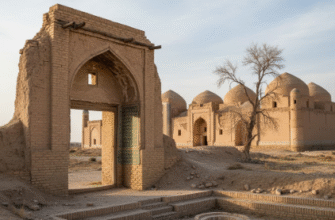
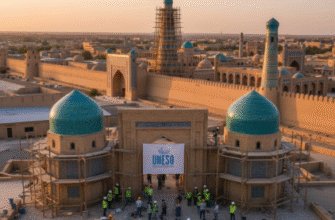
Turns out, Khiva’s workshop circuit is something else entirely. The old city, Itchan Kala, basically functions as a living museum where craftspeople have been working in the same buildings—sometimes the same rooms—for generations, and I mean that literally: some of these workshops occupy spaces that housed artisans back in the 1500s, give or take a few decades. Walking through the narrow lanes between madrasas and minarets, you’ll stumble across wood carvers whose grandfathers taught them the geometric patterns they’re chiseling into doorframes, ceramic painters mixing pigments the way their ancestors did roughly four centuries ago, and silk weavers operating looms that look like they belong in a medieval manuscript. The whole experiance feels less like a tour and more like accidentally wandering into someone’s workspace, except they’re genuinely happy to see you because, honestly, keeping these crafts alive requires both practitioners and audiences.
Here’s the thing: most visitors hit maybe one or two workshops. The ceramics place gets crowded because it’s near the west gate. But there are at least seven or eight serious workshops scattered throughout Itchan Kala, and each one reveals a different slice of Central Asian craft tradition.
The Ceramics Workshop Where Everything Happens Too Fast Then Too Slow
The master ceramicist—I think his name was Dilshod, though I might be misremembering—works in a courtyard studio that smells like wet clay and wood smoke.
He demonstrated the entire process from wedging clay to applying the distinctive Khorezm blue glaze, and what struck me was the rhythm: frantic wheel-spinning for maybe ninety seconds to throw a bowl, then this agonizing wait while it dries enough to handle, then another burst of activity painting patterns, then more waiting for the kiln. Craft work, it turns out, is mostly patience punctuated by moments of decisive action. The patterns he paints—stylized pomegranates, geometric stars, vine motifs—derive from designs you see on the tilework of nearby mosques, this constant visual conversation between architecture and object. Wait—maybe that’s overstating it, but you definately notice the same visual language repeating across different media.
Wood Carving Studios That Make You Reconsider What Counts As Art
I’ve seen wood carving demonstrations before, but Khiva’s carvers work almost exclusively in non-representational geometric patterns because of Islamic artistic traditions.
Watching someone chisel interlocking stars and polygons into walnut or mulberry wood for hours—no sketches, no guidelines, just muscle memory and mathematical intuition—does something to your perception of skill. One carver showed me a door panel he’d been working on for three months. Three months for one panel. The doors on the Juma Mosque, he mentioned casually, took a team of carvers several years. Modern efficiency has nothing on this level of ornamental obsession, and honestly, I’m not sure we’ve gained much by speeding everything up.
Silk Weaving Operations Running On Mulberry Leaves And Tradition
The silk workshop sits in a former merchant’s house, and the whole production chain happens right there: cocoons boiling in huge pots, fibers being pulled and spun, natural dyes simmering in smaller vessels, hand looms clacking away.
Anyway, the dyer explained that pomegranate skins produce yellows, indigo gives blues, madder root makes reds—essentially the same palette that’s been used in this region since the Silk Road era. What surprised me was how much physical labor goes into creating even a small piece of fabric; one woman had been working the same loom for what looked like weeks to produce maybe two meters of patterned silk. The inefficiency is the entire point, I guess.
Blacksmith Forges Still Producing Functional Tools Alongside Decorative Pieces
The blacksmith’s workshop makes the most noise—hammering echoes off the clay walls in a way that probably annoyed neighbors for centuries. They’re making knives, scissors, decorative metalwork, even the occasional traditional weapon replica for collectors. The forge runs on coal, the anvil looks ancient, and the techniques haven’t changed much because, well, metal still responds to heat and force the same way it always has.
Miniature Painting Ateliers Where Time Moves Differently Than Everywhere Else
The miniature painters work with brushes that have maybe three hairs, applying pigment to paper or wood in layers so thin you need good light to see the progression. One artist was working on a traditional Persian-style hunting scene—horses, riders, elaborate costumes—and she’d been at it for five weeks. Five weeks on something the size of a postcard. The level of detail borders on obsessive: individual feathers on birds, facial expressions on figures smaller than your fingernail, gold leaf applied in fragments. Honestly, it made me tired just watching, but she seemed completely absorbed, almost meditative.