I used to think madrasahs were just prayer halls with a few students mumbling verses in the corner.
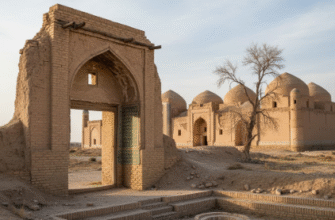
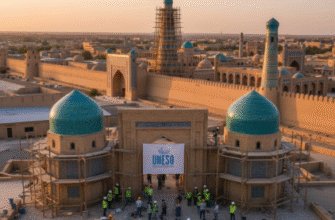
Then I spent an afternoon in Khiva’s Allakuli Khan Madrasah, and honestly, I felt like I’d stumbled into a miniature city frozen in 1835. The courtyard stretches maybe forty meters—give or take—ringed by two stories of hujras, those tiny student cells where young scholars once crammed themselves alongside their books and oil lamps. Allakuli Khan, the ruler who commissioned this place, wasn’t exactly subtle: he wanted a monument that screamed “I’m pious and powerful,” and he got it. The tilework alone—turquoise, cobalt, whites bleeding into greens—covers every archway and portal like someone couldn’t stop themselves. I’ve seen restoration work on Central Asian monuments before, but here’s the thing: the repairs are so meticulous you can’t always tell 19th-century craftsmanship from 21st-century plaster, which bothers me more than it probably should. The madrasah sits on the eastern edge of Ichan-Kala, that inner fortress that UNESCO loves, and it’s flanked by a caravanserai and a tiny hammam, both also built by Allakuli Khan, because why stop at one building when you can create an entire complex that funnels pilgrims, merchants, and students into your personal architectural ego trip?
Wait—maybe I’m being unfair to the guy.
Allakuli Khan actually ruled during a weird cultural flowering in Khiva, roughly between 1825 and 1842, when the Khanate was still independent but already feeling Russian pressure from the north. The madrasah wasn’t just religious theater; it was a functioning university where students studied astronomy, mathematics, poetry, and Islamic jurisprudence under masters who’d traveled from Bukhara or even Persia. I guess it makes sense that a ruler facing existential threats would double down on education and culture—maybe he thought scholarship could outlast conquest. The main lecture hall, or darskhana, occupies the axis opposite the entrance portal, and when you stand inside, the acoustics are uncanny: a whisper near the mihrab carries to the back corners, a trick of geometry that feels half-intentional, half-accident.
The Hujras That Still Smell Like Old Panic and Ambition
Each hujra is barely three meters square, with a single arched window and a niche for books. I crawled into one—tourists aren’t supposed to, but the guard was smoking outside—and the air still holds this faint smell of old smoke and something bitter, maybe centuries of lamp oil soaked into the brick. Students lived here for years, sometimes a decade, and I can’t imagine the claustrophobia mixed with the privilege of being chosen. The cell I entered had modern graffiti scratched into the plaster: “Jasur 2003,” which made me laugh because even vandals want to be remembered by madrasahs. The second-story hujras have slightly better views—you can see the Kalta Minor minaret’s turquoise stump looming nearby—but the stairs are steep enough that carrying books or food must’ve been a daily workout.
Tilework That Keeps Lying About Its Own Age
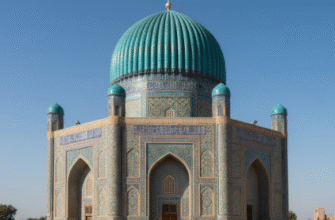
The entrance portal’s majolica panels depict geometric florals and Kufic calligraphy, the kind of intricate stuff that takes months per square meter. Except—and this annoyed me when I learned it—about thirty percent of what you see is Soviet-era restoration from the 1970s, done by craftsmen who studied old photographs but didn’t always match the original color palettes. The blues skew too bright in places, almost electric, which wouldn’t have been possible with 19th-century glazes. I asked a local guide if anyone cared about the historical inaccuracy, and he shrugged: “It looks beautiful, doesn’t it?” Which, fair enough. Turns out authenticity is negociable when the alternative is watching a UNESCO site crumble into dust.
Why Allakuli Khan Built a Hammam Right Next Door to Worship Spaces
The hammam attached to the madrasah complex is small—maybe five rooms total—but it follows the classic Persian layout: cold room, warm room, hot room, with a furnace stoked from outside. Students could bathe once a week, which was actually pretty luxurious for the era, and the proximity to the mosque meant ritual purity was baked into the architecture. I’ve read that hammams doubled as social hubs where students debated theology and politics under the cover of steam, away from official supervision. The tiles in the hot room are cracked now, and pigeons nest in the dome’s oculus, but you can still see the channels where water flowed along the walls. There’s something exhausting about standing in a ruin that was designed for rejuvenation—it makes you aware of how temporary comfort really is.
The Caravanserai Where Merchants Subsidized Scholarship Whether They Wanted To or Not
Allakuli Khan’s caravanserai sits adjacent to the madrasah, a classic move: capture trade revenue to fund religious education. Merchants traveling the Silk Road routes would stable their camels, store their goods, and pay fees that went straight into the madrasah’s operating budget. The caravanserai’s courtyard is bigger than the madrasah’s, which tells you where the khan’s priorities actually lay—education was important, but commerce was essential. I wandered through the empty storerooms, now used for tourist trinket stalls, and tried to imagine the noise: camels groaning, merchants haggling in Chagatai Turkic, Persian, maybe Russian, students slipping over to ask travelers about news from Bukhara or Samarkand. The whole complex was designed as a machine that converted trade into knowledge, which is either brilliantly cynical or cynically brilliant, depending on your mood.
Honestly, I left Khiva feeling like Allakuli Khan got what he wanted: we’re still talking about him two centuries later, still walking through his courtyards, still arguing about whether his tilework is authentic enough. Maybe that’s the real lesson of madrasahs—they’re not just schools, they’re bids for immortality disguised as piety.