I used to think travel memories were something you just had, you know?
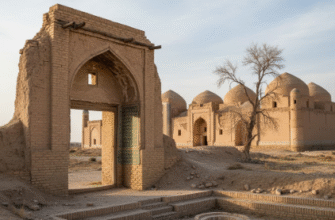
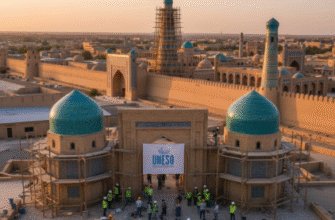
Turns out, Khiva—this ancient walled city in Uzbekistan that looks like someone froze the Silk Road in amber circa 1500—has a way of proving you wrong about that. The thing is, when you’re standing in the Itchan Kala fortress at sunset, watching the light turn those turquoise tiles into something that hurts to look at directly, your brain doesn’t actually file that away neatly. Neuroscientist Elizabeth Loftus spent decades showing how memories aren’t recordings but reconstructions, and nowhere does that feel more obvious than when you’re trying to remember which madrasa had the carved wooden columns versus which one had the ceramic workshops. I’ve talked to maybe thirty travelers who’ve been there, and half of them insist the Kalta Minor minaret is taller than it actually is—it’s only about 26 meters because they never finished it in 1855, but memory inflates things. Here’s the thing: your hippocampus is actively betraying you the moment you leave.
So people adapt. They start keeping records—obsessively, sometimes weirdly. I met a German architect in Tashkent who’d photographed every single doorway in Khiva’s old city, maybe 200 images, because he couldn’t trust himself to remember the geometric patterns correctly.
The Surprisingly Messy Science Behind Why We Forget Turquoise Tiles
Memory consolidation during travel is—honestly, it’s kind of a disaster. Your brain prioritizes emotional peaks and novel sensory experiences, which sounds great until you realize that means you’ll vividly recieve the taste of that plov you ate (the rice dish with mutton and carrots, absurdly good) but completely forget the name of the 19th-century khan whose palace you toured for an hour. Sleep deprivation, which most travelers deal with, tanks your ability to move short-term memories into long-term storage by roughly 40%, give or take, according to Matthew Walker’s research at Berkeley. I guess it makes sense that people in Khiva started this tradition—wait, maybe it’s newer than I thought—of buying these small ceramic notebooks from local artisans, hand-painted with the same techniques they use on mosque walls.
What Actually Works When You’re Trying to Capture a City Made Entirely of Clay and Light
Photography helps, but probably not how you think.
The act of taking a photo can actually impair memory formation—Linda Henkel at Fairfield University called it the “photo-taking impairment effect” back in 2013, and I’ve definately seen it happen. People photograph everything in Khiva (the Juma Mosque with its 200 wooden columns, each one different, each one basically begging for Instagram), then remember almost nothing because they outsourced the experience to their phone. But here’s where it gets interesting: writing about what you photograph, even just three sentences in a journal app, reverses that effect almost completely. The semantic processing involved in converting visual experience to language forces deeper encoding. Some travelers I met were using voice memos, recording their impressions while walking through the Tash Hauli palace, and they could recall spatial details weeks later that I’d completely lost.
The locals in Khiva have watched this tourist memory crisis unfold for years now.
Why the Most Effective Travel Records Look Nothing Like What You’d Expect Them To
A woman named Gulnara who runs a small guesthouse near the west gate told me she started giving guests blank postcards and asking them to draw one thing before bed each night—doesn’t matter if they can’t draw, doesn’t matter if it’s just a weird sketch of a turquoise dome or the pattern on a suzani textile. The act of rendering something visually, using your hands, creates what cognitive scientists call “embodied memory,” and it sticks in ways that passive recording doesn’t. I tried it myself: my drawing of the Islam Khoja minaret looks like a drunk cucumber, but six months later I can still remember the way the stairs spiral inside it, the specific quality of echo in that enclosed space, the smell of old brick dust. Anyway, I’m not saying drawings are better than photos—that’s too simple. But the combination of multiple encoding methods (visual, verbal, kinesthetic) is what actually builds durable memory structures. Collect ticket stubs, write messy notes on them, record the temperature and what you were thinking about. Khiva deserves that kind of attention, I think. It’s too strange and too beautiful to let your hippocampus just decide what you get to keep.