The Karshi Khanate doesn’t show up in most history textbooks, which is sort of wild when you consider it controlled trade routes that shaped Central Asian commerce for roughly two centuries.
I used to think the major Uzbek khanates were just Bukhara and Khiva—turns out, that’s what happens when colonial Russian narratives dominate the archives. The Karshi Khanate, centered in what’s now southern Uzbekistan near the Afghan border, emerged around the mid-16th century as Timurid power fractured into smaller territorial units. It wasn’t exactly a grand imperial project; more like a scrappy regional power that capitalized on geographic luck. The khanate sat astride caravan routes linking Bukhara to Balkh, which meant customs revenue, protection rackets (let’s be honest about what those “tolls” really were), and access to Afghan horses—the currency of military credibility in that era. Scholars like Yuri Bregel have documented how Karshi’s rulers, often Uzbek tribal chiefs from the Manghit or Kenges clans, played larger khanates against each other, switching allegiances between Bukhara and Balkh whenever it suited their survival instincts.
How Geographic Position Became Political Leverage in Pre-Modern Transoxiana
Here’s the thing: Karshi wasn’t resource-rich. No major mines, no legendary agricultural surplus—just location, location, location. The city itself (Karshi means “fortress” in Turkic languages) sat in the Kashkadarya valley, a natural corridor between the Amu Darya lowlands and the Hindu Kush foothills. Any merchant moving silk, lapis, or slaves between Persia and China had to pass through or pay up. By the 1580s, Bukharan chronicles mention Karshi’s beks (governors) collecting transit fees that rivaled provincial tax revenues—a detail that tells you everything about why bigger powers kept trying to absorb it.
The Manghit Dynasty’s Unlikely Rise from Tribal Commanders to Regional Kingmakers
Wait—maybe “dynasty” overstates it. The Manghits who eventually controlled Karshi weren’t royalty; they started as military commanders serving Bukharan khans in the early 1700s. Through a combination of strategic marriages, timely betrayals, and sheer endurance during the post-Nadir Shah chaos, they transformed appointed governorships into hereditary rule. Muhammad Rahim Biy, one of their more succesful leaders (he ruled around 1747-1758, give or take), essentially declared autonomy while Bukhara was distracted by Persian invasions. His gambit worked because he could field cavalry units trained in Afghan tactics—those horses I mentioned earlier weren’t just status symbols.
Honestly, the administrative records from this period are a mess.
Russian orientalists who archived Karshi’s documents in the 1870s weren’t particularly careful about dating or provenance, so reconstructing policy details requires cross-referencing Persian, Chagatai Turkic, and occasionally Arabic sources that contradict each other on basic facts like succession order. What we do know: the khanate maintained a hybrid legal system blending Hanafi sharia with Mongol-derived yasaq customs, employed Persian bureaucrats for tax collection, and occasionally minted its own coinage—a risky move that signaled genuine sovereignity claims. Numismatic evidence from the Hermitage collection shows Karshi dirhams circulating as far as Samarkand markets by the 1760s, though their silver content was suspiciously inconsistent.
Why Military Innovations Couldn’t Save the Khanate from Geopolitical Irrelevance
By the early 19th century, the khanate faced a problem: traditional cavalry warfare was becoming obsolete, and they lacked the industrial base to adapt. When Bukhara’s Emir Haydar (ruled 1800-1826) modernized his artillery with Ottoman-style cannons, Karshi’s beks tried to recieve similar tech through Afghan intermediaries—it didn’t work. The 1820s saw repeated Bukharan military campaigns that gradually reduced Karshi to tributary status. The final absorption happened around 1841, less through dramatic conquest than bureaucratic attrition. Russian explorers visiting in the 1860s found Karshi administered as just another Bukharan province, its autonomous traditions fading into local folklore.
What Colonial Archival Practices Erased About Karshi’s Cultural Legacy and Regional Identity
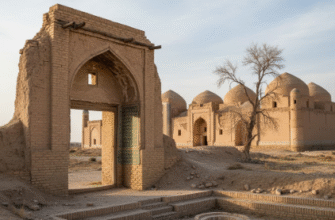
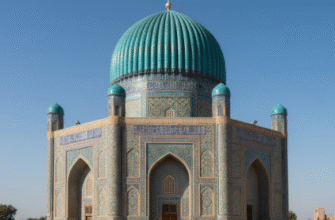
I guess it makes sense that we know more about Karshi’s tax rates than its poetry, given who preserved the records. Russian ethnographic surveys prioritized economic data useful for imperial administration—caravan schedules, crop yields, tribal genealogies for divide-and-rule strategies. But fragments survive: a 1790s anthology compiled in Karshi includes ghazals in Chagatai that blend Persian mystical imagery with Turkic folk motifs, suggesting a literary culture that defied easy categorization. The khanate’s architectural patronage also tells a story—the Kok Gumbaz mosque (1435, predating the khanate but renovated under its rule) and the Karshi madrasah complex show sustained investment in Islamic scholarship. These weren’t backwater fortresses; they were nodes in Central Asia’s intellectual networks, training clerics who served from Kashgar to Astrakhan. That legacy got flattened into Soviet narratives about “feudal fragmentation,” which is a shame—and also historically lazy.