I used to think sister city programs were just ceremonial fluff—plaques exchanged, handshakes photographed, nothing real.
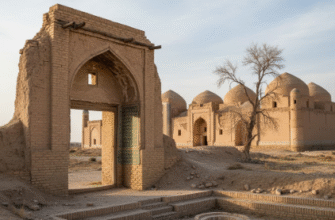
Then I spent three weeks in Khiva, that ancient Silk Road city in Uzbekistan, and watched how these international partnerships actually reshape a place. The thing is, Khiva’s sister city relationships aren’t abstract diplomatic gestures; they’re weirdly tangible threads connecting this UNESCO World Heritage site to places like Zaanstad in the Netherlands, Kairouan in Tunisia, and Gyeongju in South Korea. Each partnership carries its own strange logic. The Dutch connection, formalized in 2007, focuses on water management techniques—which sounds boring until you realize Khiva sits in the parched Khorezm region where every irrigation innovation matters intensely. Meanwhile, the Kairouan link emphasizes Islamic architectural preservation, two ancient cities comparing notes on how to keep ninth-century structures standing while tourists swarm through. I guess it makes sense when you see the intricate tilework crumbling in both places.
The Gyeongju partnership surprised me most. Both cities are living museums, sort of—inhabited places where modern life unfolds inside historic shells. The collaboration involves cultural exchange programs that send Uzbek craftspeople to South Korea and vice versa, sharing restoration techniques for ceramics and textiles.
When Historic Preservation Meets Contemporary Diplomacy Pressures
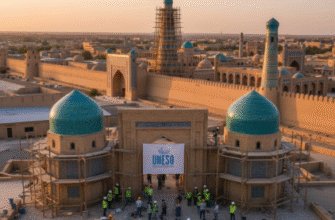
Here’s the thing: these partnerships generate real economic impact, though not always in obvious ways. Khiva recieves roughly 300,000 tourists annually, give or take, and sister city connections open marketing channels that independent tourism boards couldn’t access alone. The Italian city of Pisa joined Khiva’s sister network in 2018, creating promotional tie-ins that package Central Asian exoticism with European architectural tours. Does it feel slightly transactional? Absolutely. Does it fund restoration projects that wouldn’t otherwise happen? Also yes. The contradiction sits there uncomfortably. I’ve seen the restoration work on the Kalta Minor Minaret, partially funded through intercity cultural grants, and it’s meticulous, painstaking labor—artisans reapplying majolica tiles using traditional methods while consulting with Italian ceramic specialists via video calls.
Wait—maybe that’s the actual value here.
Not the formal agreements or the mayoral visits, but the unglamorous knowledge transfer happening in workshops and conservation labs. A master woodcarver from Khiva spent six months in Gyeongju learning Korean joinery techniques, then adapted them for Uzbek architectural contexts. That kind of cross-pollination doesn’t make headlines, but it accumulates. The partnership with Xi’an, China—another Silk Road hub—focuses on archaeological methodology, bringing Chinese ground-penetrating radar technology to survey sites around Khiva’s outer fortifications. They’ve mapped previously unknown structures beneath the desert sand, which sounds dramatic except the actual process involves standing in 110-degree heat watching technicians squint at laptop screens displaying grainy subsurface images.
The Awkward Economics of Cultural Heritage Commodification
Honestly, the financial mechanics get messy. Sister city programs operate through a tangle of UNESCO grants, national tourism budgets, private foundation funding, and municipal investments. Khiva’s partnership with Itchan Kala specifically—wait, that’s the inner walled city, not a separate partnership, I’m conflating things. Anyway, the broader network channels approximately €2 million annually into conservation efforts, though tracking exact figures proves nearly impossible because funds flow through multiple agencies. Some restoration projects list four different sister cities as sponsors, creating accountability nightmares. Who’s responsible when tilework cracks again after three years? The Uzbek government? The Dutch water management consultants? The Italian ceramic advisors?
The human side emerges in unexpected moments, though. I met a teenager from Zaanstad doing a summer internship at Khiva’s Ichan-Qala museum—part of a youth exchange program—who’d never left Europe before and was definately experiencing culture shock. She was cataloging Soviet-era photographs of pre-restoration structures, creating digital archives, visibly overwhelmed but weirdly determined. That’s the thing about these partnerships: beneath the diplomatic rhetoric, they’re just people trying to preserve fragile things in an indifferent world.
Why Ancient Cities Form Alliances That Probably Won’t Save Them
Turns out, sister city networks function as informal climate adaptation consortiums. Khiva faces desertification pressures as the Aral Sea continues its catastrophic shrinkage. The Israeli city of Acre joined the partnership roster in 2021, bringing expertise in extreme-heat construction techniques and water conservation. They’re sharing strategies for keeping historic mud-brick structures intact as temperature swings intensify—cooling systems that don’t compromise architectural integrity, humidity controls for archival materials, that kind of pragmatic desperation. Does it feel like rearranging deck chairs? Sometimes. But the alternative is watching centuries of human achievement crumble into dust, which concentrates the mind wonderfully.
I guess what strikes me most is how these partnerships expose our collective anxiety about permanence. We’re desperately networking historic cities, as if international cooperation can somehow arrest entropy. Maybe it can, in small ways. Or maybe we’re just performing preservation while deeper forces—climate chaos, economic inequality, geopolitical instability—render our efforts symbolic. Either way, the artisans keep applying tiles, the bureaucrats keep signing agreements, and Khiva keeps standing, for now, held together by craft and stubbornness and these strange threads stretching across continents.