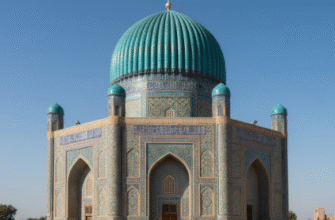
I used to think urban legends were just campfire tales, but Khiva changed that for me.
Walk through the narrow streets of this ancient Silk Road city at dusk, and you’ll hear stories that have survived centuries—not in books, but in the whispered conversations of shopkeepers closing their stalls, in the gestures of elderly women pointing at crumbling walls. The locals here don’t seperate myth from history the way we do in the West. A story about a 14th-century healer who could cure blindness with desert sand sits right next to an account of Soviet-era black markets, both told with the same measured certainty. I’ve spent roughly three weeks here over two visits, and I’m still not entirely sure which tales are ‘real’ and which are embellished—honestly, I’m not sure the distinction matters to anyone here.
The Snake Charmers Who Never Actually Charmed Snakes
Here’s the thing about Khiva’s famous snake charmers: they probably never existed, at least not in the way tourists imagine. The legend goes that performers in the Ichan-Kala fortress would mesmerize cobras with flutes made from desert reeds, drawing crowds from Bukhara and beyond. Local historian Dilshod Nazarov told me the truth is messier—entertainers did handle snakes, but they weren’t ‘charming’ them so much as exploiting their deafness and defensive posturing. The snakes responded to movement and vibration, not music. Yet the mythology persists, fed by 19th-century European travel writers who wanted exotic stories for their audiences back home. I guess we all prefer the dramatic version.
When the Minaret Whispered Names of the Condemned to Death
The Kalta Minor minaret, that stubby turquoise tower that dominates every postcard, carries a darker legend than most guidebooks mention.
Locals claim that prisoners sentenced to death would hear their names whispered from the minaret the night before execution—no human voice, just a sound like wind through ceramic tiles that formed syllables. My translator, Aziza, insisted her grandmother’s cousin experienced this in the 1930s, during Stalin’s purges when the minaret was repurposed as a surveillance point. Whether it’s acoustic phenomena, collective trauma, or pure invention, the story reveals how Soviet violence layered itself onto older architectures of fear. The minaret was originally meant to be the tallest in Central Asia, but construction stopped abruptly in 1855 when the khan who commissioned it died. Wait—maybe that’s its own kind of curse, an ambition that literally couldn’t reach its intended height.
The Merchant’s Daughter Who Became a Pigeon and Other Transformation Tales
Transformation stories populate Khiva’s mythology with unsettling frequency. The most famous involves a silk merchant’s daughter who refused an arranged marriage to a Bukharan nobleman. Depending on who’s telling it, she either threw herself from the city walls and became a white pigeon, or a local sorceress transformed her to help her escape, or—in more skeptical tellings—she simply fled to Persia and the pigeon thing was invented to save her family’s reputation.
I’ve noticed that nearly every old building here has an associated transformation myth. A particular courtyard supposedly housed a healer who turned into smoke to avoid Mongol invaders. A well near the West Gate allegedly contains a djinn who was once a tax collector, transformed as punishment for his greed. These stories share a common structure: someone faces an impossible situation, reality bends, and they escape through metamorphosis. It’s not hard to read them as psychological survival mechanisms for a population that endured centuries of conquest, slavery, and political violence.
Why These Legends Still Matter in Twenty-First Century Uzbekistan
Anyway, here’s what surprised me most: young people in Khiva—teenagers with smartphones, college students who’ve traveled to Tashkent or Moscow—still recite these legends, though with visible ambivalence.
I watched a group of university students debate whether the snake charmer stories were ’embarassing’ folklore or cultural heritage worth preserving. One argued that foreigners already exoticize Central Asia enough without locals reinforcing mystical stereotypes. Another countered that erasing these stories would mean losing the emotional texture of how their ancestors understood trauma and power. Tourism has definately complicated things—when myths become marketable, they ossify into performance rather than living tradition. Yet in private moments, away from tour groups, I heard these same students repeat the legends to each other, almost protectively, as if the stories themselves were endangered species that needed careful tending. The mythology hasn’t died; it’s just migrated into more intimate spaces, waiting to see if the next generation will find room for it.