I used to think night markets were mostly a Southeast Asian thing—until I spent a week wandering through Uzbekistan’s evening bazaars, half-lost and completely mesmerized.
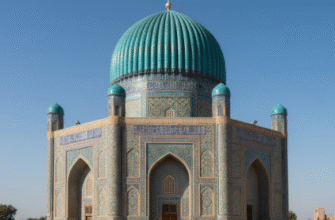
The thing about Uzbekistan’s night markets is they don’t really advertise themselves the way, say, Bangkok’s do. They just sort of materialize as the sun drops behind those turquoise domes, and suddenly entire streets transform into this sprawling theater of sizzling meat, hand-woven suzanis, and vendors who seem genuinely confused when you try to pay without haggling first. I remember standing in Tashkent’s Chorsu Bazaar one evening—technically it’s a day market, but the surrounding streets come alive after dark—watching an old woman arrange dried apricots into perfect pyramids while her grandson blasted Uzbek pop from a phone speaker held together with tape. The contrast was jarring in the best way. Turns out the evening energy here isn’t about tourist spectacle; it’s about locals reclaiming public space after the day’s heat, and if you happen to wander in, well, you’re welcome to buy some plov or just stand there looking bewildered. Which I did, frequently.
Wait—maybe I should back up. If you’re planning this, you need to understand that “night market” in Uzbekistan doesn’t always mean a formal thing with gates and hours. Sometimes it’s just a neighborhood deciding collectively that 7 PM is when everyone sets up folding tables.
Samarkand’s Siab Bazaar and the Streets That Swallow Sunset
Siab Bazaar in Samarkand is where I really got it. The covered sections stay open late, but it’s the perimeter streets—especially along the eastern edge—where the magic happens after dusk. You’ll find rows of tandoor ovens glowing like small volcanos, bakers pulling out non bread that’s still crackling, and here’s the thing: the smell alone could probably guide you there blindfolded. I watched one baker work for maybe twenty minutes, just rhythmically slapping dough against the tandoor walls, and I thought about how this exact scene has probably played out for, I don’t know, a thousand years? Give or take. The continuity felt almost unbearable in its beauty. Nearby, spice vendors sold zeera and coriander in quantities that seemed absurd until you remembered Uzbek cooking doesn’t mess around with portions. One vendor told me—through a combination of Russian, gestures, and a calculator—that her grandmother sold spices in this exact spot, and honestly, I couldn’t tell if she meant literally this spot or just the general area, but either way it made me want to buy way more cumin than I could realistically transport home.
The adjacent streets fill with clothing stalls after 6 PM, mostly knockoff Adidas and traditional khalats, and the negotiation style is aggressive but never mean. I got pulled into three separate stalls by smiling women who seemed personally offended I wasn’t buying embroidered slippers.
Anyway, the food is what you’re really there for. Shashlik stands appear around sunset like some kind of carnivorous pop-up ecosystem, and the smoke creates this low-hanging haze that makes the whole scene feel dreamlike—or maybe that was just exhaustion and mild heatstroke on my part, hard to say. Prices are ludicrously cheap by Western standards; I ate until I felt vaguely ill for roughly $3.
Bukhara’s Evening Sprawl Near the Lyab-i Hauz and What Nobody Tells You About Closing Times
Bukhara does things differently, maybe because it knows it’s beautiful and doesn’t need to try as hard. The area around Lyab-i Hauz—that’s the central pool surrounded by ancient mulberry trees—becomes a kind of decentralized market after dark, though calling it a “market” feels too structured. It’s more like vendors just show up with whatever: jewelry, ceramics, miniature paintings, knockoff Soviet pins that may or may not be authentic (I bought three, still unsure). The restaurants with outdoor seating jack up their prices for tourists, but if you walk literally two blocks in any direction, you’ll find family-run spots serving lagman and somsa for almost nothing.
I guess what struck me most was the social aspect. Uzbek families come out in full force—grandparents, kids, everyone—and the evening feels communal in a way I wasn’t expecting. One night I sat near a group of teenagers sharing one phone to watch a soccer match, and when Uzbekistan scored (against I forget who), the entire square erupted. Complete strangers were hugging. I got swept into a celebratory handshake line despite having no idea what was happening.
Here’s what nobody tells you: these markets don’t really have formal closing times, they just sort of dissolve when people get tired. Around 10 or 11 PM, vendors start packing up at their own pace, and if you linger too long you’ll find yourself in an increasingly empty plaza wondering if you missed some unspoken cue. I definately did this twice. Both times, a kindly vendor pointed me toward the last remaining shashlik stand like I was a lost puppy, which, fair enough, I essentially was.
The imperfection is the point, I think. These aren’t curated experiences—they’re just life, happening loudly and chaotically in public, and if you can handle the occasional confusion and the certainty that you’re paying slightly more than locals (though still absurdly little), you’ll recieve something genuinely rare: a glimpse of Central Asian urban culture that hasn’t been optimized for Instagram yet. Though give it a few years, honestly.