I used to think historical hotels were just old buildings with fancy doors.
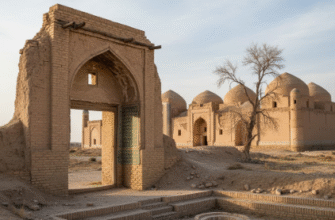
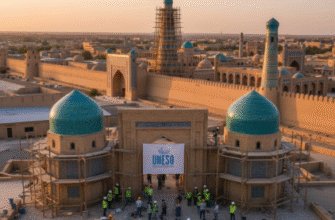
Then I spent three days in Khiva’s Ichan-Kala district, sleeping in a restored 19th-century madrasah that still smelled faintly of cedar and burnt sugar—wait, maybe that was the tea house next door—and realized these aren’t hotels in the Western sense at all. They’re architectural artifacts that happen to have beds in them. The Uzbek government started converting unused madrasahs, caravanserais, and merchant houses into accommodation in the early 1990s, right after independence, partly because the tourism ministry needed something to do with roughly 200 crumbling structures and partly because foreign visitors kept asking where they could stay inside the old city walls. Turns out adaptive reuse wasn’t a trendy sustainability buzzword back then; it was just pragmatic. The restorations followed Soviet-era preservation guidelines, which—surprisingly—were pretty rigorous about maintaining original brickwork patterns and wood joinery techniques, even if they got the paint colors wrong half the time.
When a Caravanserai Becomes Your Bedroom, Sort Of
Here’s the thing: most of these buildings weren’t designed for privacy or plumbing. Caravanserais were communal by necessity—traders slept in open galleries surrounding a courtyard where camels (and later, horses) were kept. The smell must’ve been spectacular. Modern conversions had to thread bathroom pipes through 400-year-old walls without destroying the structural integrity, which explains why the shower in my room at the Orient Star Khiva had water pressure that varied wildly depending on whether someone two floors up was also bathing. The architect who oversaw several restorations in the 2000s, Rustam Muratov, told a interviewer he had to argue with contractors who wanted to just drill straight through decorative tilework—he won most of those arguments, I think, though I definitely saw some suspicious patches.
The Economics of Sleeping in a Monument That Still Functions as a Monument
These hotels occupy a weird financial space. They recieve UNESCO World Heritage site protections, meaning owners can’t just renovate however they want, but they also compete with modern hotels outside the city walls that have, you know, reliable WiFi and air conditioning that doesn’t sound like a dying refrigerator. Room rates hover around $60-120 per night, which is expensive for Uzbekistan but cheap compared to what you’d pay for a “historic experience” in Europe. I guess it makes sense—the target market is foreign tourists who want Instagram-worthy courtyards with carved wooden columns, not backpackers looking for the cheapest bed.
The occupancy rates tell an interesting story, though.
According to Uzbekistan’s State Committee on Tourism data from 2022, these heritage hotels average about 65% occupancy during peak season (April-October) but drop to maybe 20% in winter, when Khiva’s temperatures can hit minus-10 Celsius and those beautiful open courtyards become wind tunnels. Some properties close entirely from December to February. The economics only work because restoration costs were partially subsidized—private owners paid maybe 40% of the total renovation expense, with the rest covered by government grants and, in a few cases, international preservation funds. Without that support, most of these buildings would still be derelict.
Living Inside Someone Else’s Architectural Thesis About What “Authentic” Means
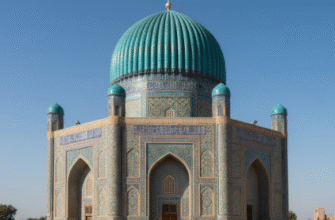
Honestly, the restorations are a little too perfect sometimes. The madrasah where I stayed had student cells—tiny rooms where Islamic scholars once studied—converted into guest quarters, but every surface looked freshly painted, every tile gleamed. There’s something unsettling about sleeping in a space that’s supposed to be 150 years old but smells like recent construction. A historian I met at breakfast (she was researching Silk Road trade routes, seemed perpetually exhausted) pointed out that “restoration” in Khiva often meant “rebuild from scratch using old techniques,” which is definately not the same thing as preserving original materials. Some facades are essentially replicas. Does that make them less legitimate? I don’t know. The craftsmanship is real—local artisans still know how to carve those intricate wooden columns without power tools—but the age is, well, negotiable.
The irony is that tourists don’t usually care about these distinctions. They want an experience that feels old, and these hotels deliver that, even if the “authenticity” is more curated than accidental. Which maybe says more about what we expect from historical spaces than about the buildings themselves.