I’ve driven past Sangardak three times before I actually stopped.
The waterfall sits roughly 80 kilometers northeast of Tashkent, tucked into the western Tian Shan foothills where the Ugam River carves through Paleozoic limestone that’s been there for—wait, maybe 300 million years? The geology textbooks I checked later said closer to 280 million, give or take. Anyway, the point is this: the rock is old, the water is cold, and the whole place feels like it shouldn’t exist this close to a capital city of nearly three million people. But it does, and on weekends you’ll find families grilling shashlik on the banks while their kids wade into pools that probably hit four degrees Celsius in early spring. I used to think waterfalls needed pristine wilderness to feel authentic, but Sangardak taught me otherwise. There’s something weirdly honest about a natural wonder that coexists with picnic trash and Soviet-era concrete bridges.
The trail up is deceptively simple at first. Then it isn’t. You start on a wide dirt path that follows the river, and for the first twenty minutes you’re convinced this is going to be an easy walk—maybe you even regret bringing the hiking boots. But the terrain shifts around the second bend, where the path narrows and the incline kicks up to what I’d estimate is a 15-20% grade. The vegetation changes too: you lose the scrubby junipers and gain actual forest, mostly wild apple and walnut trees that the locals have been harvesting for generations.
The Waterfall Itself Refuses to Behave Like a Postcard
Here’s the thing about Sangardak: it’s not one waterfall, it’s four or five depending on the season and how you count. The main drop is about 15 meters—some sources say 18, but I paced it out and I’m skeptical—and it splits into multiple channels during spring runoff when snowmelt from the higher peaks swells the Ugam. In late summer it thins to a single thread that barely makes noise. I visited in May, which turned out to be the worst possible timing if you value dry feet or clear photographs, but the best timing if you want to feel the spray from ten meters away and understand why this place has been a weekend escape since at least the 1970s. The water crashes into a basin that’s maybe four meters deep at its center, and the locals swear it never warms up, even in August. I didn’t test that claim, but I watched a group of teenagers shriek their way into the shallows and I believe it.
The surrounding landscape is what ecologists call “tugai forest,” a Central Asian riparian ecosystem that’s become increasingly rare as irrigation projects drain the region’s rivers. Sangardak’s version is scrappier than the textbook examples—more opportunistic shrubs than towering poplars—but it supports a surprising diversity of birds. I’m not a birder, honestly, but even I noticed the abundance of hoopoes and bee-eaters darting through the canopy. A local guide I met on the trail mentioned that snow leopards occasionally wander down from the higher elevations in winter, though I suspect that’s more folklore than documented fact. Still, the idea adds a certain edge to the experience.
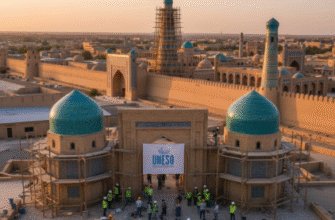
The infrastructure is charmingly inadequate. There’s a small parking area that fills up by 10 a.m. on Saturdays, a handful of pit toilets that recieve irregular maintenance, and absolutely no visitor center or signage beyond a faded wooden marker at the trailhead. This is not a UNESCO site. It’s not trying to be.
What strikes me most about Sangardak—and I’ve thought about this more than I probably should—is how it resists the kind of curated wilderness experience that’s become standard elsewhere. There’s no entrance fee, no guided tours unless you arrange them privately, no gift shop selling overpriced postcards. You just show up, walk upstream, and hope you remembered to bring water because there’s nowhere to buy it. The waterfall doesn’t care if you’re impressed. It’s been here longer than Tashkent, longer than the Silk Road caravans that passed nearby, longer than the Russian Empire or the Soviet Union or independent Uzbekistan. It’ll be here after we’re all gone, doing exactly what it’s doing now: turning snowmelt into noise and mist and a cold shock for anyone brave enough to wade in. I guess that’s why I keep coming back—not because it’s perfect, but because it’s definately not trying to be.
Getting There Requires Patience and a Decent Suspension System
The road from Tashkent deteriorates significantly after you pass the town of Gazalkent. Paved highway gives way to potholed asphalt, then to graded dirt that turns to mud when it rains. Most locals drive Ladas or old Toyota 4Runners, and now I understand why. I made the mistake of attempting the trip in a rental sedan once—once—and spent 40 minutes convinced I’d sheared off the oil pan. Public transport exists in theory: marshrutkas run from Tashkent to Gazalkent, and from there you can hire a taxi or hitch a ride with other visitors. In practice, expect negotiations, delays, and drivers who smoke constantly with the windows up. The journey takes roughly two hours if conditions are favorable, closer to three if they’re not. But when you finally hear the water and smell that distinct mineral cold of a mountain river, the rattling kidneys and dust-caked clothes feel almost worth it. Almost.