I used to think street food in Uzbekistan would taste like Turkey, maybe Georgia—something familiar enough that I could pretend I understood it.
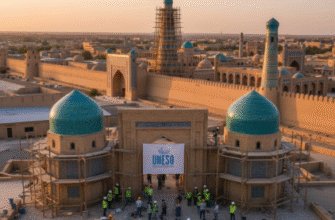
Turns out, Khiva’s old town is a different animal entirely. The first time I walked through Ichan-Kala’s west gate, I passed a woman selling somsa from a clay oven built into the city wall itself, and the smell—mutton fat, cumin, something faintly sweet I couldn’t identify—hit me like a physical thing. She was pulling these triangular pastries out with a long metal hook, and they were blistering hot, the pastry flaking apart in my hands before I could even get it to my mouth. I burned my tongue badly enough that I couldn’t taste anything properly for the rest of the day, which is honestly the most authentic way to start a street food tour: with minor injury and immediate regret. But here’s the thing—I went back the next morning. And the morning after that. Because once you get past the initial pain, once your mouth acclimates to the temperature at which Khivans apparently prefer to consume their food, you start noticing layers: the lamb is fatty but not greasy, cut with onions that have been cooked down until they’re almost jammy, and there’s black pepper in there, maybe coriander, definitely something else I still haven’t identified. I asked her what was in it and she just smiled and said “Khiva,” which I guess is as good an answer as any.
The somsa thing is not unique to that one woman, obviously. Every hundred meters or so, there’s another tandyr oven, another vendor, another variation. Some use beef, some add pumpkin in the fall, one guy near the Kalta Minor minaret does a version with potato and dill that shouldn’t work but absolutely does. The pastry changes too—some fold it thick, some roll it thin enough to see through, some brush it with egg, some with milk.
Finding the Stuff They Don’t Sell to Tourists (Except They Totally Do, Just Less Obviously)
Walk past the main bazaar—I mean really past it, not just to the edge where the carpet sellers transition into the suzani sellers—and you’ll hit a cluttered stretch of street where old men sit on low stools drinking tea that looks like it could strip paint.
This is where I found shivit oshi, which I’m going to describe badly because I still don’t entirely understand it. It’s green noodles—and I mean aggressively green, dyed with dill and sometimes spinach—served in a yogurt-based broth with vinegar, more dill, and vegetables that vary depending on who’s making it. The first time I tried it, I thought it was broken somehow, like the cook had messed up the proportions, because the flavors were so sharp they almost hurt. The yogurt was sour, the vinegar was sour, even the dill tasted sour, and I couldn’t figure out why anyone would do that on purpose. Then I ate it in summer, when Khiva hits 40°C and walking feels like moving through a furnace, and suddenly it made perfect sense. It’s not a dish, it’s a survival mechanism. You eat it cold, you eat it fast, and you feel human again for maybe twenty minutes. I’ve seen tourists skip it entirely, which—I get it, it looks weird and tastes weirder. But if you’re there between June and August, you’re missing the point of the place if you don’t at least try it.
There’s also tukhum barak, which is just dumplings, except they’re not.
They’re oversized, thumb-thick parcels of dough stuffed with egg and onion, then dropped into mutton broth that’s been simmering since before dawn. The egg doesn’t fully cook—it stays soft, almost creamy, so when you bite in, it oozes into the broth and makes the whole thing richer. Some vendors add quail eggs instead, which changes the ratio in a way I can’t quite articulate but definately notice. You eat them with your hands, usually while standing, and they’re heavy enough that two of them counts as a full meal. I watched a local guy eat seven in one sitting once, and I still think about that sometimes, with a mix of awe and concern.
The Bread Situation, Which is Both Simple and Completely Overwhelming
Non is just bread, right? Round, flat, baked in a tandyr—how different could it be?
Very different, it turns out. Maybe thirty different types, depending on who you ask and how they’re counting. There’s obi-non, which is the everyday version, stamped in the center with a chekich pattern and sprinkled with sesame or nigella seeds. There’s patyr, which is richer, layered with butter or sheep tail fat until it’s almost croissant-like. There’s katyrma, fried instead of baked, greasy in the best way. And then there are regional variations I can’t even name, sold by women sitting outside the mosques or near the madrassas, and each one tastes slightly different—different flour, different water, different oven temperature, who knows. I bought the same type of non from three different vendors in one afternoon and got three completely different results, which should have been frustrating but was actually kind of thrilling. Anyway, the point is, you can’t just try one and think you’ve figured out Khivan bread. You need to try, I don’t know, at least a dozen, and even then you’re only scratching the surface. I spent a week there and barely made a dent. I guess it makes sense—bread is the baseline, the thing everyone eats every day, so of course it’s going to have more variation than any single tourist could reasonably catalogue. But it’s humbling, honestly, to realize how much complexity exists in something you’d normally take for granted.