Starting at the North Gate Where Most Tourists Never Actually Begin Their Walk
I used to think everyone started their Khiva wall walk at the West Gate, near Kunya-Ark.
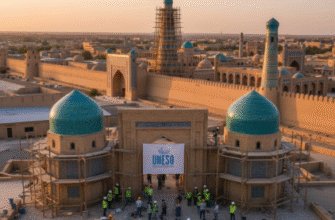
Turns out, if you begin at the North Gate—Bogcha Darvoza—you’ll encounter maybe three other people in the first hour, which is wild considering this UNESCO site pulls in thousands daily. The walls here stretch roughly 2,200 meters around the entire Itchan Kala, the inner city, and they’re built from packed mud brick that’s been patched and re-patched for, oh, give or take 250 years since the last major reconstruction in the 1790s. The thing is, these aren’t just decorative—they’re ten meters high in most places, six meters thick at the base, and they were genuinely meant to keep armies out. You can see the watchtowers every 30 meters or so, squat and serious, and honestly it’s exhausting just imagining hauling construction materials up there in 40-degree heat.
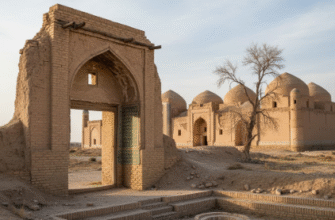
The north side feels quieter, almost forgotten. Some sections have crumbled enough that you can see the layered construction—mud, straw, more mud—and there’s this weird intimacy in seeing a wall’s guts exposed like that.
The Eastern Stretch Where the Light Does Something Strange in Late Afternoon
Wait—maybe it’s the angle, or the way the clay absorbs sun, but around 5 PM the eastern walls turn this burnt orange that doesn’t photograph well.
I’ve walked this section four times now, and each time I’m struck by how the fortifications here are in better shape than the north, probably because restoration teams focused efforts on the side facing the modern city. There’s a small door—Palvan Darvoza—that locals still use as a shortcut, and you’ll see kids on bikes weaving through, which feels anachronistic against these ancient defenses. The walls were supposedly completed under Allah Quli Khan’s rule in the early 1800s, though some historians argue construction was more piecemeal, spanning decades. Here’s the thing: the records are messy, contradictory even, and that’s sort of perfect for a city that’s been conquered and rebuilt so many times nobody’s entirely sure which layer belongs to which century.
Anyway, the eastern gate—Tash Darvoza—is where you’ll find vendors selling pomegranates in September.
South Side Chaos and the Gate Everyone Actually Knows About
The southern wall runs adjacent to the main bazaar, so expect noise.
This is where tour groups congregate, because the Ota Darvoza gate here is the most photographed entrance—it’s got those iconic turquoise tiles and the best preservation work. I guess it makes sense that funding goes where the cameras point, but it creates this weird imbalance where the south side feels almost Disneyland-polished while other sections are literally crumbling. The walls here were damaged in a 1878 siege by Russian forces, then rebuilt hastily, then restored again in Soviet times with cement (a decision conservationists now definately regret because cement traps moisture and accelerates decay). You can see the patches if you look close—different textures, slightly off colors.
It’s also the hottest section at midday, no shade, and I’ve watched tourists literally sprint this part.
The Western Face That Still Has Bullet Scars From 1920
Most people don’t realize the Khiva walls saw combat as recently as the Basmachi Revolt.
On the western stretch, near Uch Avliyalar Darvoza, there are pockmarks in the clay—small, irregular—that local guides will tell you are bullet impacts from when Red Army forces clashed with resistance fighters. I can’t verify every mark’s origin, but some are unmistakably metallic scars, and running your hand over them feels intrusive, like touching someone’s old wound. This side also backs onto residential neighborhoods, so you’ll hear TVs through windows, smell plov cooking, and the contrast between ancient military architecture and domestic life is jarring. The walls were never just monuments—they were working infrastructure, and in some strange way they still are, defining neighborhood boundaries and property lines.
The walk ends, or loops back, depending on how you think about circles.
What Nobody Mentions About Completing the Full Circuit on Foot
It takes about 90 minutes at a steady pace, two hours if you stop for photos.
Your feet will hurt—the ground around the perimeter is uneven, part paved, part dirt, part crumbled brick—and there are exactly zero benches for most of the route. I’ve seen older visitors struggle with the distance, which is frustrating because there’s no signage indicating how far you’ve gone or how much remains. The walls themselves are free to walk around (you only pay to enter the inner city), but that also means no amenities, no water fountains, no bathrooms until you duck back through a gate. Here’s what surprised me most: the experience feels different depending on direction. Clockwise, you’re walking toward the sun most of the day; counterclockwise, you’re chasing shade. Small thing, huge impact on comfort. Also, the walls look taller from outside than inside, an optical trick of perspective that messes with your sense of scale until you’re standing at the base looking up, realizing these were built to intimidate as much as to protect.