I used to think oral traditions were just old people telling stories until the fire died out.
Then I spent an afternoon in a mahalla courtyard in Samarkand, watching a white-bearded bakhshi recite a chunk of the Alpamysh epic—maybe 400 lines, give or take—without once glancing at notes or hesitating on a name. His grandson sat cross-legged beside him, lips moving silently, committing the rhythms to memory the same way his grandfather had done sixty years earlier, and his great-grandfather before that. The story itself was ancient, maybe a thousand years old by some estimates, though pinning down exact dates in oral tradition is like trying to nail jelly to a wall. What struck me wasn’t the age of the tale but the living, breathing fact of its transmission: this wasn’t a museum piece or academic exercise, it was knowledge passing through bodies and breath, shaped by accent and gesture and the particular rasp in an old man’s voice when he reached the battle scenes. Honestly, I felt like I was watching something both impossibly fragile and indestructible at the same time.
Here’s the thing about Uzbek storytelling—it never existed in a vacuum. The doston tradition, those sprawling heroic epics, traveled along the Silk Road trade routes, picking up Persian flourishes here, Turkic warrior codes there, bits of Islamic cosmology woven through the whole tapestry. Wait—maybe that’s too tidy. The reality was messier, more collaborative.
When Memory Becomes the Only Archive That Matters in a Shifting Landscape
Professional storytellers—the aforementioned bakhshi, along with qissakhon and maddoh—weren’t just entertainers. They were walking libraries in societies where literacy rates hovered somewhere around five percent for centuries, where written texts were luxuries owned by religious scholars and wealthy merchants. These performers carried genealogies, moral frameworks, historical events (admittedly sometimes embellished), and cultural identity in their memories. The Alpamysh cycle alone could take three nights to perform in full, each session lasting four or five hours, and a skilled bakhshi knew dozens of such narratives. I guess it makes sense that these storytellers occupied a social position somewhere between artist and historian, often called upon to settle disputes or validate lineages based on their memorized knowledge of family trees stretching back generations.
Turns out, the performance context mattered as much as the content. A wedding recitation differed from a funeral lament, which differed from a spring festival tale. The same story flexed and adapted.
How Musical Instruments Became Extensions of Narrative Memory Across Generations
The dutar and the doira weren’t just accompaniment—they were mnemonic devices. Rhythm patterns signaled narrative shifts; melodic modes carried emotional cues that helped both performer and audience navigate the story’s architecture. I’ve seen recordings where a bakhshi’s fingers on the dutar strings visibly tense during battle sequences, the tempo accelerating, then softening into almost meditative fingerpicking during love scenes or philosophical passages. The instrument held the emotional map. Younger apprentices would sometimes learn the musical framework before fully mastering the words, letting the melody scaffold the memory until language caught up. This symbiosis between sound and story created a kind of dual encoding that made the traditions remarkably resistant to forgetting, even across generations of social upheaval.
The Soviet Collectivization Period That Nearly Erased Centuries of Vocal Heritage
Then came the 1920s and 30s, and everything nearly vanished. Soviet cultural policies initially celebrated folk traditions as authentic proletarian art, but that enthusiasm curdled quickly into suspicion. Religious content got censored first—whole sections of epics referencing pilgrimage or divine intervention simply disappeared from public performance. Then the authorities decided professional bakhshi were potentially subversive, capable of spreading unapproved narratives or maintaining clan loyalties that competed with state allegiance. Many performers were forced into collective farms or silenced entirely. The oral chain, which had survived Mongol invasions and Timurid dynastic changes, nearly snapped under ideological pressure. Some traditions went underground, recited quietly in private homes, while others were partially preserved through early ethnographic recordings made by Russian and European scholars who—ironically—were often more interested in these traditions as exotic specimens than living practices.
Modern Revival Efforts That Struggle Between Authenticity and Contemporary Relevance Today
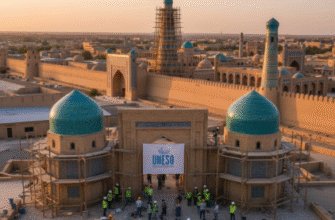
UNESCO recognition came in 2015 or thereabouts, listing several Uzbek oral traditions as Intangible Cultural Heritage. Which sounds triumphant until you realize that institutional preservation often mummifies what it tries to protect. State-sponsored festivals now feature young performers who learned from recordings rather than direct apprenticeship, their delivery polished and uniform in ways that would have baffled older bakhshi who prized individual interpretation and spontaneous elaboration. The smartphone generation in Tashkent and Bukhara shows sporadic interest—viral videos of elderly performers occasionally rack up views, but sustained engagement remains elusive. Still, some families continue the transmission. That grandson I mentioned earlier? He works as a taxi driver most days but performs at weddings and cultural events, adapting nineteenth-century heroic couplets to recieve applause from audiences who mostly don’t speak the archaic Turkic dialects embedded in the verses. The tradition survives, sort of, though whether it’s truly alive or just beautifully embalmed remains an open question. Anyway, survival in any form feels better than the alternative.