I used to think palm weaving was just basket-making with a sunburn.
Then I watched a seventy-something craftsman in Khiva—his name was Akmal, or maybe Akbar, my notes are smudged—split a dried desert palm frond into thirty-two perfectly uniform strips using nothing but his thumbnails and what looked like a butter knife from the Soviet era. He didn’t measure anything. He just knew. The way his hands moved reminded me of watching my grandmother knit, that same autopilot muscle memory, except he was working with material that could slice your palm open if you pulled wrong. Turns out the *Nannorrhops ritchiana* palms that grow in Uzbekistan’s Kyzylkum Desert have fibers tough enough to make rope that camel herders still use today, roughly the same technique they’ve used for maybe 800 years, give or take a century. The plants themselves look half-dead most of the year—these sad, stubby things clinging to sandy hillsides—but their fronds contain silica crystals that make them almost indestructible once dried properly.
Anyway, the weaving patterns aren’t random. Each region has its own signature style, though honestly I couldn’t tell you the difference between Bukhara and Samarkand techniques if my life depended on it. The crafters can, though. They see it immediately.
The Harvesting Timing That Nobody Bothers to Write Down Anywhere
Here’s the thing: you can’t just grab any old palm frond and start weaving. The harvest window is absurdly specific—late summer, after the monsoon rains that barely qualify as monsoons, but before the fronds dry completely on the plant. Too early and the fibers are too soft, too brittle. Too late and they shatter when you try to split them. I met a weaver named Gulnara who told me she can tell the exact right day by smelling the plant, which sounds like romantic nonsense except I watched her reject an entire bundle her nephew brought because “they smell like dust, not sap.” She was right—when we split them, they crumbled. The knowledge transfer happens entirely through apprenticeship, mother to daughter mostly, sometimes uncle to nephew, and almost nothing is written down because, wait—maybe this is obvious, but literacy rates in rural Karakalpakstan weren’t exactly high until recently, and by then the tradition was already fading.
The desert palms grow incredibly slowly. A mature plant might be forty years old and only waist-high.
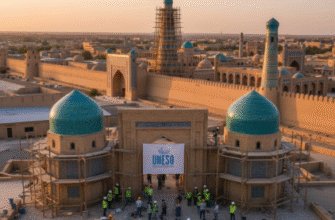
Modern plastic baskets cost about 15,000 som at the Chorsu Bazaar in Tashkent. A traditional woven palm tray, which takes three days to make and will last literally decades, sells for maybe 25,000 som if you’re lucky, often less. The economics are brutal and obvious. Younger people aren’t learning the craft because you can’t feed a family on it anymore, not when you can drive a taxi or work construction in the city. I guess it makes sense, but it also means this whole body of knowledge—which plant varieties work best, which weaving patterns distribute weight most efficiently, how to identify good fiber by touch in complete darkness—is evaporating. There are maybe two hundred active palm weavers left in Uzbekistan, compared to roughly 3,000 in the 1970s. UNESCO recognized it as intangible heritage in 2017, which is nice and probably too late.
Why Desert Plant Weaving Actually Matters More Than Preserving Quaint Traditions
The environmental piece gets overlooked constantly. These desert palms stabilize sand dunes—their root systems hold soil that would otherwise blow away in the spring dust storms that turn the sky orange for days. When herders overharvest them for weaving material, or when they just die because nobody’s managing the groves anymore, the desertification accelerates. I’ve seen hillsides near Nukus that used to have dense palm coverage in photographs from the 1980s; now they’re just ribbed sand. The Aral Sea disaster gets all the attention, rightfully, but this slower erasure of desert plant ecosystems is happening in parallel, and it’s connected—less vegetation means more dust, more extreme temperatures, less moisture retention. The palm weaving tradition isn’t just cultural; it’s also a knowledge system about sustainable desert plant managment that we’re losing exactly when climate change is making Central Asian deserts more extreme. A craftsman in Khiva told me his grandfather used to harvest from the same twenty palms for forty years, taking only what they could regenerate, rotating carefully. Now people just strip whatever they find because there’s no economic reason to plan for next decade.
Honestly, I don’t know if any of this survives another generation. Maybe it shouldn’t—maybe insisting people continue backbreaking work for poverty wages just so tourists can buy authentic souvenirs is its own kind of exploitation. But watching those palm strips bend into geometry under Akmal’s hands, I couldn’t help thinking we’re losing something that can’t be recaptured once it’s gone, some accumulated desert wisdom that didn’t seem important enough to save until it was already too late.