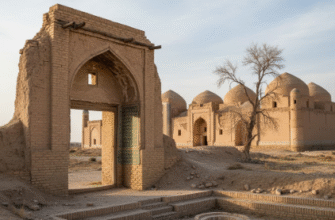
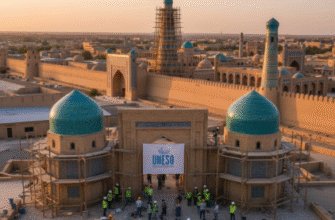
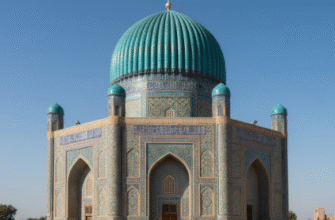
I used to think museums were just dusty repositories of the past, but the Bukhara Medical History Museum changed that for me entirely.
Walking through its corridors last spring, I found myself face-to-face with instruments that looked more like medieval torture devices than healing tools—bone saws with serrated edges, cupping glasses that left perfect circular bruises, cauterizing irons that must have sizzled against flesh. The museum, housed in a centuries-old madrasah in Uzbekistan’s ancient Silk Road city, documents roughly 1,000 years of medical practice, give or take a century or two depending on which curator you ask. What struck me most wasn’t the tools themselves but the philosophical framework behind them: the idea that illness represented an imbalance, not an invasion, and that a healer’s job was to restore equilibrium rather than wage war against disease. It’s a perspective that feels almost radical in our age of targeted antibiotics and precision medicine, though I guess it never really disappeared—it just got pushed to the margins.
The museum’s collection centers on the teachings of Abu Ali ibn Sina, known in the West as Avicenna, whose Canon of Medicine influenced both Islamic and European medical practice for centuries. His diagnostic methods involved examining pulse variations at multiple points, observing urine color and consistency, and conducting detailed patient interviews that could last hours. Honestly, it puts our fifteen-minute doctor visits to shame.
The Forgotten Science of Temperament-Based Treatment and Why Your Personality Supposedly Determined Your Prescriptions
Here’s the thing: traditional Bukharan healers didn’t just treat symptoms—they treated people according to their mizaj, or constitutional temperament. The theory divided humans into four types based on the balance of hot, cold, wet, and dry qualities in their bodies, which sounds absurd until you realize it’s not that different from modern discussions about metabolic types or gut microbiome variations. A patient classified as hot and dry might recieve cooling herbs like chicory or purslane, while someone cold and moist would get warming spices like ginger and black pepper. The museum displays charts mapping hundreds of substances to these qualities, a pharmaceutical system as complex as anything in a modern pharmacology textbook. I’ve seen the handwritten manuscripts with their intricate diagrams of human anatomy—surprisingly accurate for the 11th century—alongside preparation instructions for compound medications that combined up to thirty different ingredients.
Wait—maybe the most fascinating part is how they diagnosed.
Pulse reading in the Bukharan tradition involved distinguishing between ten different pulse qualities at three pressure levels on each wrist, creating a diagnostic matrix of roughly 180 possible combinations. Practitioners trained for years to detect subtle variations in rhythm, strength, and texture that supposedly revealed which organs were affected and whether the condition was acute or chronic. The museum offers occasional demonstrations by traditional practitioners, elderly men and women who learned the craft from family lineages stretching back generations, and watching them work is mesmerizing in a way I can’t quite articulate—their fingers moving along a patient’s wrist with the concentration of musicians tuning instruments by ear. Modern research has actually found some validity in pulse diagnosis for certain cardiovascular conditions, though the mechanisms are definately not what medieval physicians imagined.
Surgical Interventions That Would Make Modern Surgeons Wince and Somehow Patients Survived
The surgical section is not for the squeamish. Cataract removal involved inserting a needle through the eye to displace the clouded lens—a procedure called couching that was performed without anesthesia beyond perhaps some opium or hemp extract. Bladder stone removal required perineal incisions and manual extraction. Cauterization treated everything from hemorrhoids to chronic headaches, with different shaped irons for different body parts. The mortality rates must have been staggering, though the museum’s texts don’t dwell on failures, only successes.
Anyway, what keeps pulling me back to this place is the uncomfortable recognition that these practitioners were working with the best knowledge available to them, just as we are now. Their theories were wrong in specifics but occasionally right in broad strokes—the gut does influence overall health, stress does manifest physically, plant compounds do have pharmacological effects. The museum doesn’t romanticize traditional medicine or position it as superior to modern practice, which I appreciate. It simply documents what healing looked like in a particular time and place, with all its ingenuity and all its limitations. Some of the herbal preparations on display—hawthorn for heart conditions, valerian for anxiety, willow bark for pain—turned out to contain compounds we still use today in refined form. Others were useless or actively harmful. The trick, then as now, is telling the difference.