I used to think mountain biking near Tashkent meant dusty roads and not much else.
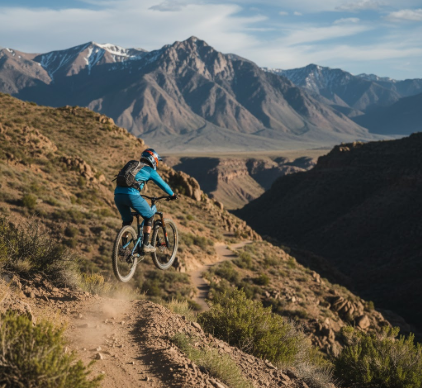
Turns out—and this surprised me when I first moved here, honestly—the Tian Shan foothills basically deliver some of the most underrated riding in Central Asia, maybe anywhere if you’re into that raw, unpolished kind of terrain that doesn’t show up on Instagram every five seconds. The trails here don’t have the manicured feel of, say, Whistler or Moab, but there’s something about bombing down a loose scree slope at roughly 2,500 meters elevation, give or take, with zero other riders in sight, that recalibrates what you think biking should feel like. I’ve seen riders from Kazakhstan, Russia, even a few Germans who stumbled onto these routes and couldn’t believe they’d never heard of them before. The infrastructure is patchy—some trails are barely marked, others have these hand-painted signs that contradict each other slightly about distances—but that’s part of the weird charm, I guess. You’re not here for convenience. You’re here because the Chimgan area exists and nobody’s turned it into a resort experience yet.
Wait—maybe I should back up. The accessibility is better than you’d expect. Most trailheads sit about 80 kilometers northeast of the city, reachable by marshrutka or car in under two hours depending on traffic and how aggressively your driver interprets lane markings.
The Beldersay Valley Run: Technical Descents That’ll Definately Humble You
Here’s the thing: Beldersay isn’t gentle. The main descent from the cable car station drops roughly 1,200 vertical meters through a mix of singletrack, doubletrack, and sections where the trail just sort of dissolves into rubble and you’re making choices in real time. I rode it last spring—still had snow patches in the shaded zones, which made the exposed root sections extra spicy—and by kilometer three I’d already questioned my tire pressure twice and my life choices once. The upper portion winds through juniper forests that smell incredible when it’s warm, then opens into these alpine meadows where local shepherds sometimes wave or look mildly confused by lycra-clad foreigners. The technical bits aren’t marked by difficulty; you just encounter a rock garden or a washout and deal with it. Some riders love that. Some riders walk sections. Both are fine, honestly, because the views toward Kumbel Peak make you forget you’re tired until you start pedaling again and remember immediately.
The trail surface varies wildly—hardpack one moment, loose shale the next. Honestly exhausting but addictive.
Chimgan’s Ridge Routes: Where the Exposure Gets Real and the Wind Never Stops
Chimgan Ridge runs higher and windier than Beldersay, tracing the spine between valleys at elevations pushing 3,000 meters in spots, and the exposure is the kind that makes you very aware of where your front wheel is pointing at all times, maybe even slightly paranoid if you’re prone to that. I guess it makes sense that fewer riders attempt this one—it requires either shuttling or a brutal climb, and the weather shifts fast enough that I’ve started rides in sun and finished in hail within the same two-hour window. The payoff is those long, sweeping turns with nothing but sky on one side and the valley floor way, way down on the other, the kind of visual scale that photographs never quite capture. You’ll share the trail with hikers, occasionally horses, and once I passed a guy carrying a car battery uphill for reasons he didn’t explain and I didn’t ask about. The descent toward Nanay village is flowy where it’s not rocky, rocky where it’s not eroded, and eroded where you least expect it, which keeps things interesting in that heart-rate-spiking way. Micro-emotions here: equal parts wonder and low-level dread, especially on the knife-edge sections where the trail narrows to maybe 40 centimeters and the wind pushes sideways.
The Gulkam Canyon Traverse: Creek Crossings, Soviet-Era Bridges, and Unexpectedly Smooth Singletrack
Gulkam doesn’t get mentioned much in forums, probably because it’s harder to shuttle and the access road washed out a few years back, but if you can organize the logistics—or you’re okay with a long approach—it’s maybe the most varied riding near the city, definitely the most scenic in that lush, green, water-everywhere kind of way. The trail follows the canyon floor for maybe 15 kilometers, crossing the creek four or five times depending on seasonal flow, sometimes over wobbly wooden bridges that look like they were installed during the Brezhnev era and haven’t been touched since. I’ve seen riders bail at the first crossing, which is fair because the water runs cold and the rocks are slick and there’s no cell service if things go sideways. But past that initial gauntlet, the singletrack smooths into these fast, bermed turns under birch canopy, the kind of flow state riding where you stop thinking and just react. Then it dumps you out into open steppe and the terrain changes completely—hardpacked dirt, low scrub, dust plumes if it hasn’t rained—and you’re suddenly navigating by distant landmarks instead of trail markers. Anyway, the whole experience feels like three different rides stitched together, which either sounds appealing or chaotic depending on your temperament. For me, it’s the one I keep coming back to even though the shuttle situation is a nightmare.
The trails here won’t hold your hand. But they’ll remind you why you started riding in the first place, which might matter more.