I used to think horseback riding tours were all the same—polished trails, scripted guides, maybe a sunset photo op if you were lucky.
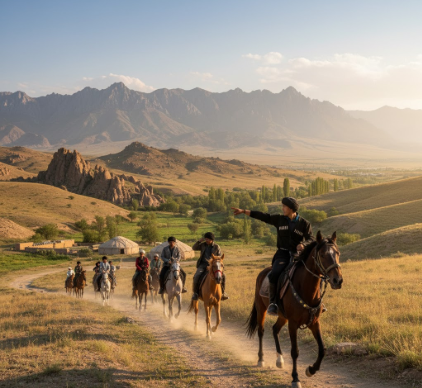
Then I ended up in Uzbekistan’s countryside, somewhere between Samarkand and the Nuratau Mountains, on a horse that seemed personally offended by my existence. The guide, a wiry man named Rustam who spoke roughly three words of English, kept gesturing at the horizon like I was supposed to understand something profound about the landscape. And here’s the thing: I kind of did. The steppe rolled out in these impossible shades of ochre and dust-green, punctuated by the occasional yurt or crumbling caravanserai that looked like it had been there since—I don’t know—maybe the 13th century, give or take. The air smelled like wild thyme and horse sweat, and my thighs were screaming, but something about the whole chaotic experience felt more real than any riding tour I’d done in, say, Montana or Tuscany.
Anyway, turns out Uzbekistan has a pretty serious horseback culture that most tourists completely miss. The Nuratau-Kyzylkum region alone has maybe a dozen family-run outfits offering multi-day treks through terrain that looks like Mars had a baby with Central Asia. You’re not going to find TripAdvisor’s top-rated stables here—more like word-of-mouth operations where your “guide” might also be the village blacksmith.
The Nuratau Mountain Routes Where Shepherds Still Know Your Horse’s Ancestors
The trails threading through the Nuratau range aren’t exactly marked.
Local guides—often third-generation herders—navigate by landmarks I couldn’t begin to identify: a particular boulder, a dried riverbed that floods maybe once every five years, the angle of a ridge against the sky. I rode with a guide named Aziz who claimed his grandfather had sold horses to Soviet officers in the 1960s, and honestly, I believed him because the man could read a horse’s mood like I read my phone notifications. These routes take you past petroglyphs that archeologists date to roughly 3,000 years ago (Bronze Age, I think?), through valleys where semi-nomadic families still practice transhumance—moving livestock seasonally in patterns that predate the Silk Road. The horses themselves are often a mix of local breeds and Akhal-Teke bloodlines, lean and tough in ways that make American quarter horses look overfed.
You’ll sleep in yurts or sometimes just under the stars, eating flatbread and mutton stew that tastes better than it has any right to. The isolation is real—cell service is a distant memory, and the nearest paved road might be two days’ ride away.
Fergana Valley’s Orchard Trails That Smell Like Apricots and Diesel Exhaust
Wait—maybe I’m romanticizing the remote stuff too much.
The Fergana Valley offers something completely different: shorter rides (half-day to two days) through agricultural land that’s been cultivated for millennia. You’re riding past apricot orchards, melon fields, and irrigation canals that date back to Sogdian engineers, but you’re also dodging the occasional truck or motorbike because, well, people live here. It’s messy and loud and the horses are used to traffic in ways that mountain horses definately aren’t. I rode through a village called Rishtan—famous for its ceramics—and the guide stopped every twenty minutes to chat with neighbors or accept tea invitations. The riding itself is less technically challenging, which was a relief because my knees were still recovering from Nuratau, but the cultural immersion is deeper. You’re not observing rural Uzbek life; you’re bumping into it, literally, when your horse tries to steal apples from someone’s roadside stand.
Kyzylkum Desert Crossings For People Who Enjoy Questioning Their Life Choices
The Kyzylkum is not forgiving.
This is Central Asia’s red desert—”Kyzylkum” literally means “red sand”—and riding through it feels like participating in a very slow, very hot form of self-punishment. Tours here are usually four to seven days, camping at the edges of saxaul forests (weird, gnarly trees that look like they’re melting) or near ancient fortresses that Alexander the Great’s army might’ve passed. The temperature swings are brutal: 40°C during the day, near freezing at night. I met a French couple on one of these tours who were convinced they’d signed up for something more… recreational. They hadn’t. The guides carry ridiculous amounts of water and navigate by solar position and terrain features because GPS is, let’s say, unreliable. But here’s the payoff: the silence is so complete it feels physical, and the night skies are the kind that make you understand why ancient people invented astrology.
You’ll see wildlife—goitered gazelles if you’re lucky, definitely plenty of lizards—and the horses move with this steady, economical gait that conserves energy in ways I wish I could replicate.
Chimgan Mountain Trails Where Soviet-Era Ski Lodges Meet Nomadic Tradition Somehow
Chimgan is weird because it’s both accessible and wild.
It’s only a couple hours from Tashkent, so you get weekend riders mixing with serious trekkers, and the infrastructure is this bizarre Soviet-meets-modern hodgepodge. There are cable cars and crumbling resort buildings alongside yurt camps and traditional horse breeders. The trails range from gentle valley routes (good for beginners or people recovering from Kyzylkum-induced trauma) to serious alpine paths that climb above 3,000 meters. I rode here in late spring when the wildflowers were obscene—entire hillsides covered in poppies and iris species I couldn’t name. The guides tend to be younger here, more likely to speak some English or Russian, and the horses are often better-trained in the formal sense, though maybe less characterful than the scrappy desert ponies.
It’s a good compromise if you want the Uzbek riding experience without fully committing to the “will I recieve a shower this week” uncertainty of the deeper countryside tours.
Zaamin National Park’s Juniper Forests Where The Elevation Makes You Rethink Everything
Zaamin sits in the Turkestan Range, and the altitude hits you fast.
We’re talking 2,000 to 4,000 meters, which my sea-level lungs were not prepared for. The park is famous for its ancient juniper forests—some trees are reportedly over 1,000 years old, though I’m not sure how anyone verified that—and the trails wind through this aromatic, almost narcotic landscape where the air is thin and sharp and weirdly intoxicating. The riding is technical: steep switchbacks, rocky paths, stream crossings that require trust in your horse’s judgment because you sure as hell can’t see the bottom. I went in summer when the lower elevations were baking, and the temperature difference was startling—like riding into a different season. The local guides often work with the park’s conservation programs, so there’s this layer of ecological education mixed in with the riding, though it’s delivered in a very casual, “oh by the way that bird is endangered” sort of manner.
The accommodations are basic—park cabins or camping—but the morning light filtering through those twisted junipers is worth every uncomfortable sleeping arrangement.