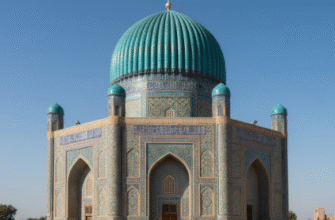
The ruins sit there, about 60 kilometers north of Termez, and honestly, most people drive right past without noticing.
When Alexander’s Army Left More Than Footprints Behind in Central Asia
Dalverzintepa isn’t exactly a household name, even among archaeology enthusiasts, which is strange considering it’s one of the most intact Greco-Bactrian settlements we’ve got from roughly the 3rd century BCE, give or take a few decades. I used to think the Silk Road cities were all about trade and spices and romantic caravans, but here’s the thing—this place was a proper urban center, with fortifications that suggest someone was genuinely worried about getting attacked. The walls stretch for about 2.5 kilometers, enclosing something like 35 hectares of what used to be streets, temples, residential quarters, and administrative buildings. Excavations in the 1970s and 80s, led by Uzbek and Soviet archaeologists, uncovered coin hoards, Buddhist stupas sitting right next to Zoroastrian fire temples, and pottery that shows influences from Greece, Persia, India, and local Bactrian traditions all smooshed together. It’s messy. It’s also facinating in ways that neat historical narratives never quite capture.
The Bizarre Cultural Mashup That Shouldn’t Have Worked But Did
What gets me about Dalverzintepa is the sheer audacity of its cultural blending—Greek columns supporting buildings with Central Asian floor plans, terracotta figurines depicting Hellenistic gods wearing what look like Bactrian tunics, inscriptions in Greek script describing distinctly non-Greek religious practices. After Alexander the Great swept through in 329 BCE, his generals didn’t just conquer; they settled, intermarried, and created these hybrid societies that defnately weren’t purely Greek anymore. The Greco-Bactrian Kingdom lasted roughly from 256 to 125 BCE, and Dalverzintepa represents one of its provincial strongholds. Archaeological evidence suggests the city thrived through trade—positioned between the Oxus River (modern Amu Darya) and the mountain passes leading to India, it became a nexus for merchants, pilgrims, and probably more than a few spies and adventurers.
Anyway, the artifacts tell stories the ancient historians never bothered to record.
What Buddhist Monks and Greek Philosophers Argued About Over Dinner
The religious landscape at Dalverzintepa reads like someone’s fever dream of syncretism. Excavators found a Buddhist monastery complex—complete with meditation cells and a stupa containing relics—literally adjacent to a Zoroastrian fire temple, with Greek-style shrines scattered nearby. I guess it makes sense when you remember that this was centuries before religious exclusivity became the norm in most places. The famous Milinda Panha, a Buddhist text recording dialogues between the Greek king Menander I and a Buddhist monk, probably reflects conversations that actually happened in cities like this. People worshipped multiple gods, attended different temples depending on what they needed, and apparently nobody thought this was particularly strange. Wait—maybe that’s the wrong way to put it, because we’ve found evidence of sectarian tensions too, burnt buildings that might indicate religious conflict, coin propaganda promoting specific deities over others.
The Treasure Hoards That Keep Rewriting the Economic History Books
In 1972, archaeologists uncovered a massive coin hoard at the site—thousands of silver and copper coins, some minted locally, others from as far as the Mediterranean and northern India. What struck researchers was the sophistication of the monetary system: standardized weights, quality control marks, even what appear to be banker’s stamps indicating authenticity guarantees. This wasn’t a backwater. Economic historians now estimate that Greco-Bactrian cities like Dalverzintepa had trade volumes comparable to contemporary Mediterranean ports, moving silk, lapis lazuli, spices, horses, and probably slaves though nobody likes to dwell on that last part. The coins also tell us about inflation, currency debasement during political crises, and emergency minting during invasions—basically, ancient economic policy captured in metal.
Why This Crumbling Adobe Fortress Matters More Than You’d Think
Modern Uzbekistan doesn’t exactly top most travelers’ bucket lists, and Dalverzintepa suffers from benign neglect as a result—insufficient funding for preservation, minimal tourist infrastructure, erosion gradually reclaiming what archaeologists painstakingly uncovered. But here’s what keeps me up at night: this site represents a crucial moment when East genuinely met West, not through conquest alone but through sustained cultural exchange, intermarriage, shared economic interests, and religious experimentation. The Greco-Bactrian period created networks and precedents that shaped the Silk Road for centuries afterward. When Chinese pilgrims traveled to India seeking Buddhist texts, they followed routes and stayed in cities whose foundations were laid by Greek colonists. The pottery styles, architectural techniques, and even agricultural practices developed here spread across Central Asia and into China. Turns out, these ruins north of Termez aren’t just about one forgotten city—they’re about the actual mechanisms of cultural transmission, the uncomfortable truth that civilizations have always been mongrels, and the persistent human tendency to build something new from whatever materials, ideas, and people happen to be available.