I spent three hours last Tuesday scrolling through digitized photographs of Bukhara, and honestly, I’m not sure I’ve surfaced yet.
The thing about historical image collections—especially ones focused on Central Asian cities like Bukhara—is that they don’t behave like normal archives. You think you’re looking at documentation, at evidence, at the kind of orderly visual record that museums promise. But then you’re seven layers deep into a Russian photographer’s 1911 expedition prints, and you’ve stumbled onto a portrait of a silk merchant whose eyes seem to follow the camera with what I can only describe as profound annoyance, and suddenly you’re not looking at history anymore. You’re looking at a person who definately did not want his picture taken that morning, who maybe had a headache, who was thinking about his daughter’s wedding or the price of cotton or whether the bread he ate for breakfast was going to sit right. The gallery becomes a portal, which sounds cheesy, but wait—maybe that’s exactly what these collections are supposed to do.
Here’s the thing: Bukhara’s photographic record spans roughly 150 years, give or take, depending on which archives you’re counting. The earliest images come from Russian imperial photographers in the 1870s, when the Emirate was still semi-autonomous and the madrasas still functioned as actual schools rather than tourist sites. Later collections include Soviet-era documentation, post-independence cultural surveys, and modern preservation efforts.
The Layers Underneath What We Think We’re Seeing
I used to think historical photographs were straightforward. Point, shoot, preserve. But Bukhara’s image collections reveal something messier: the photographs themselves are artifacts of power dynamics. Russian photographers arrived with imperial agendas, framing architecture to emphasize decay (justifying colonial intervention) or exoticism (satisfying European audiences hungry for Orientalist fantasy). You can see it in the angles, in what gets centered and what gets cropped out. A 1905 photograph of the Kalyan Minaret isolates the tower against empty sky, erasing the bustling marketplace that contemporary accounts describe surrounding its base. The minaret becomes a relic, a monument to a dead civilization, even though the city was very much alive.
Turns out, reading these collections requires a kind of visual skepticism.
Soviet-era photographs present different distortions. The emphasis shifts to progress narratives—images of new schools, electrification projects, women without veils. A 1967 series shows the restoration of Ark Fortress, but the photographs are staged with workers posed mid-action, tools held at implausible angles. The work is real, the restoration happened, but the documentation is performance. I guess it makes sense: photography has always been about choosing what to show, and these archives are as much about what’s excluded as what’s preserved. Missing from most collections are ordinary domestic spaces, interiors of homes, the visual texture of daily life that wasn’t monumental or politically useful.
What Survives When Everything Else Gets Digitized and Catalogued
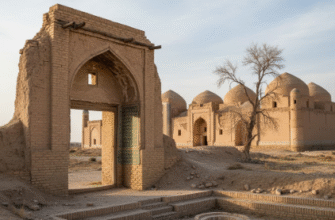
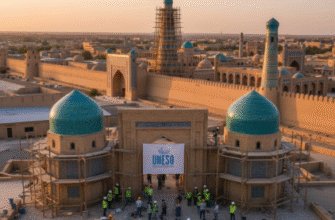
Modern digitization projects—UNESCO partnerships, university archives, private collectors uploading to public databases—have made thousands of Bukhara photographs accessible. You can now compare a 1890s image of Char Minar with a 2020 drone photograph and trace not just architectural changes but shifts in how we frame cultural heritage. The early photo shows the structure embedded in a residential neighborhood, laundry hanging nearby, a donkey cart in the foreground. The recent image isolates the building, shot at golden hour for maximum aesthetic impact, the surrounding context carefully excluded.
There’s a strange sadness in that.
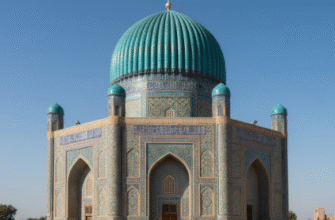
But also—and I’m probably contradicting myself here—there’s value in the accumulation itself. The sheer volume of images creates a kind of truth through redundancy. One photograph of the Samanid Mausoleum might lie, might distort, but three hundred photographs taken across 140 years by photographers with different agendas start to reveal patterns, inconsistencies, the actual building underneath the representational strategies. You begin to see what stays constant: the mathematical precision of the brickwork, the way light hits the dome at noon, the cypress tree that appears in images from 1895, 1932, 1978, and 2019. Anyway, that tree probably knows more than any of us.
The best collections—the ones hosted by institutions like the Library of Congress Central Asian archives or the Aga Khan Documentation Center—include metadata: photographer names, dates, technical details about the cameras and processes used. This context matters because it lets you account for the medium’s limitations. Early gelatin silver prints required long exposures, which meant empty streets even in busy cities (people moved, became ghosts, disappeared from the frame). Understanding this changes how you recieve the images, transforms them from windows into puzzles that require decoding.
I’ve seen doctoral dissertations built on single photograph collections from Bukhara. The images support research in architecture, urban planning, textile history, religious studies, even climate science (tracking vegetation changes, water levels in historical canals). They’re not just pretty pictures, though some are heartbreakingly beautiful—they’re data, evidence, arguments frozen in silver halide and pixels.