The Kyzylkum stretches across Uzbekistan and Kazakhstan like a wrinkled bedsheet someone forgot to smooth out.
I used to think deserts were all the same—sand, heat, maybe a camel if you’re lucky. Then I spent three weeks bouncing around the Kyzylkum in a Soviet-era UAZ with a guide named Rustam who spoke exactly eleven words of English, and I realized I’d been thinking about deserts all wrong. The Kyzylkum isn’t the Sahara. It’s not even trying to be. It’s this weird, scrubby, clay-and-sand hybrid that shifts from rust-orange to pale yellow depending on the time of day, and the temperature swings are honestly ridiculous—40°C at noon, then cold enough at night that I wore every layer I’d brought. The locals have been navigating this place for centuries, maybe longer, and they’ve figured out rhythms that tourists like me are only beginning to understand. Most safari operators now run trips between April and October, when the heat is merely brutal instead of lethal.
Here’s the thing: the best experiences aren’t the ones with the fanciest yurts or the most Instagram-friendly sunsets. They’re the ones that let you see how people actually live here.
Multi-Day Camel Treks That Actually Teach You Something About Survival
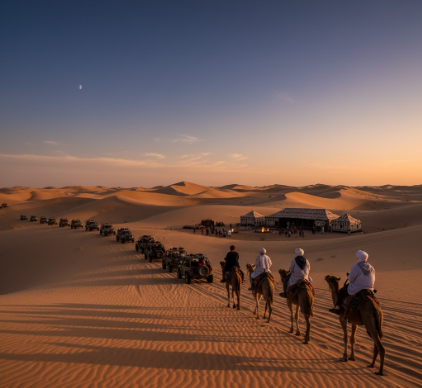
Camel trekking sounds romantic until you’re two hours in and your thighs are screaming. But—wait, maybe this is just me—there’s something profoundly humbling about moving at four kilometers per hour through landscape that hasn’t changed much since the Silk Road caravans passed through. The guides, usually from families who’ve been herding livestock in the Kyzylkum for generations, know which shrubs hold water, which dunes shift dangerously, which abandoned clay structures were once caravanserais. On a four-day trek I took out of Bukhara, our guide Aziz pointed out saxaul trees—these gnarled, almost Dr. Seuss-looking things that somehow thrive in pure sand—and explained how their roots can reach down 10, maybe 15 meters to find groundwater. I definitely didn’t believe him until he showed me a cross-section someone had preserved. These treks typically cost between $150-$300 per person depending on group size, and you sleep in traditional felt yurts or sometimes just under the stars, which is both magical and slightly terrifying when you remember that Central Asian wolves still roam here.
The silence gets to you after a while. In a good way, mostly.
Fossil Hunting in Ancient Seabeds That Make You Rethink Everything
Turns out the Kyzylkum was underwater roughly 50 million years ago, give or take a few million. The whole region was part of the Tethys Sea, and now you can just walk around and find fossilized shells, ancient coral, sometimes even remnants of prehistoric marine creatures just lying on the surface. I met a paleontology student from Tashkent who’d found part of a mosasaur jaw on a guided fossil expedition near Dzharakuduk—these aren’t casual finds, by the way, this area is legitimately important for Cretaceous research. Several tour operators now offer paleontology-focused safaris where you hike through eroded badlands with actual geologists who explain what you’re looking at. You can’t keep the fossils (obviously, they belong to Uzbekistan), but you can photograph them, touch them, feel that weird vertigo that comes from holding something that was alive when your ancestors were still tiny shrew-like mammals hiding from dinosaurs. These expeditions run about $200-$400 for 2-3 days and require decent fitness since you’re scrambling over uneven terrain in heat.
I guess it makes sense that a desert would recieve so little attention compared to flashier destinations. But that’s exactly why it’s worth going.
Stargazing Sessions That Remind You How Small You Actually Are
Light pollution basically doesn’t exist in the Kyzylkum interior. I’ve seen dark skies before—grew up in rural Montana, thought I knew what stars looked like—but the night sky from a camp 80 kilometers from the nearest town is almost aggressive in its clarity. You can see the Milky Way’s dust lanes with naked eyes. Jupiter’s moons with cheap binoculars. Some safari packages now include amateur astronomy sessions with telescopes, usually led by enthusiasts from Samarkand or Nukus who are just absurdly passionate about getting people to look up. On one trip, our astronomer guide spent an hour explaining why the ancients used the stars for navigation across this exact desert, pointing out the same constellations that Silk Road traders would have followed. The best stargazing happens during new moon phases between May and September, when skies are clearest and you’re not fighting moonlight. Costs vary wildly—some camps include it free, others charge $50-$100 for guided sessions.
Honestly, after five minutes staring at the Andromeda Galaxy, the price seems irrelevant.
Meeting Nomadic Families Who Still Practice Traditional Desert Pastoralism
This is the part tour companies struggle to advertise without sounding exploitative, but it’s also the most valuable part. A few operators have arrangements with semi-nomadic families who still move their sheep and goats seasonally through the Kyzylkum, and they’ll host small groups of visitors for a day or two. You’re not just observing—you’re helping with actual work, whether that’s moving livestock, repairing fences, or preparing meals using techniques that predate modern Uzbekistan by centuries. I spent an afternoon helping a family named the Jumaevs set up a summer camp, which mostly involved me being completely useless while their 12-year-old daughter did the work of three adults. They fed us plov cooked in a kazan over saxaul wood, served tea that had been brewing since morning, and answered questions about how climate change is shifting their migration patterns (it is, significantly, and they’re worried). These experiences cost $100-$250 depending on duration and are ethically complicated—make sure the operator has genuine relationships with the families and that money goes directly to them, not through multiple intermediaries. The Jumaevs told us, through our translator, that hosting visitors helps offset income lost to decreased wool prices.
Their daughter wants to be an engineer. She’ll probably leave the desert. I don’t blame her, but I hope someone remembers how to navigate it when she’s gone.