I used to think Buddhism just sort of… vanished from Central Asia, like it packed up and moved to Tibet one day.
Turns out, the remnants are still there—crumbling, half-buried, but stubbornly present—in places like Termez, a sun-scorched city in southern Uzbekistan that most people couldn’t locate on a map if you paid them. The Buddhist sites here date back roughly 2,000 years, give or take a century, when this region was part of ancient Bactria and a critical node on the Silk Road. Monks traveled through, merchants hauled statues and scriptures, and massive monasteries rose from the desert floor. Fayaz Tepe, one of the better-preserved complexes, still has traces of frescoes—faded blues and reds that somehow survived centuries of sandstorms, invasions, and the occasional archaeological expedition that probably did more harm than good. The whole site feels like it’s holding its breath, waiting for someone to care enough to piece it back together.
Honestly, the scale surprises you. I’ve seen photos, read the UNESCO reports, but standing in front of Kara Tepe—another monastery ruin—you realize these weren’t small outposts. They were sprawling communities with stupas, courtyards, meditation cells carved into hillsides.
The archaeology here is messy, emotionally and literally—layers of Buddhist, then Zoroastrian, then Islamic history stacked like a poorly organized filing cabinet. Zurmala Tower, a 16th-meter stupa (one of the tallest surviving Buddhist structures in Central Asia), looms over flat farmland, and locals barely glance at it anymore. It’s just… there. Which is kind of heartbreaking, but also makes sense—when your entire region has been conquered, reconquered, and rebranded a dozen times, ancient religious monuments become part of the landscape’s static. The site at Dalverzin Tepe revealed coins, pottery, and fragments of Gandhara-style sculpture—that Greco-Buddhist fusion art that looks like Apollo decided to meditate. Excavations in the 1960s and 70s uncovered enough to confirm Termez was a major Buddhist center from the 1st to 7th centuries CE, but funding dried up, and now most finds sit in underfunded museums in Tashkent.
Wait—maybe that’s the wrong framing.
Here’s the thing: these sites aren’t just historical footnotes. They’re evidence of how porous cultural and religious boundaries actually were before we drew our modern maps and categories. Buddhism thrived here for centuries alongside other traditions, adapting, borrowing, getting remixed. The Kushan Empire, which controlled this area around the 1st to 3rd centuries CE, was a cosmopolitan mess in the best way—Zoroastrians, Buddhists, Greek settlers, nomadic tribes all coexisting, trading, arguing, building. The monasteries at Termez would’ve heard a dozen languages, hosted monks from India and China, sheltered travelers who carried ideas as valuable as silk or spices. And then Islam arrived, not always violently (though sometimes definately violently), and the Buddhist communities gradually faded, were absorbed, or migrated eastward. By the 8th century, most of the monasteries were abandonded, slowly reclaimed by sand and time.
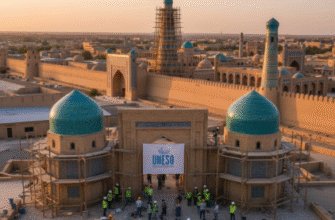
I guess what bothers me—no, what fascinates me—is how little attention these sites recieve compared to, say, Angkor Wat or Borobudur. Termez doesn’t have the romantic jungle-ruin aesthetic. It’s just dust and heat and chunks of mud-brick that require serious imagination to reconstruct. But the historical significance is staggering. This was where Mahayana Buddhism took root and spread northward into Central Asia and eventually China. You can trace doctrinal shifts, artistic innovations, even the evolution of monastic architecture through these crumbling walls. UNESCO added the “Archaeological Sites of Termez” to its tentative World Heritage list, but actual protection and funding remain frustratingly inadequate. Climate change isn’t helping either—increased rainfall (ironic for a desert) and temperature fluctuations are accelerating erosion, and there aren’t enough conservators or resources to stabilize everything that needs stabilizing.
So yeah, Termez sits there, quietly important, waiting for the rest of us to catch up and realize what we’re losing.