I used to think puppet museums were just dusty storage rooms with glass cases and bad lighting.
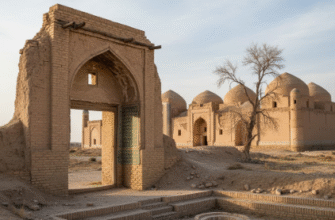
Then I walked into the Bukhara Puppet Museum on a Tuesday morning—one of those mornings where the light hits the old city walls at exactly the right angle—and realized I’d been carrying around a completely wrong idea about what traditional performance art actually means in Central Asia. The museum sits in a restored caravanserai near the Lyab-i Hauz complex, and the thing that struck me first wasn’t the puppets themselves but the smell: old wood, silk that’s been handled by hundreds of performers over roughly two centuries (give or take a few decades), and something else I couldn’t quite place. The director, a woman named Malika who’d been working with puppets since she was seven, told me that smell was rope—specifically, the mulberry-fiber rope used to control the marionettes in traditional Bukhara performances. She said it differently than I expected, almost defensively, like I might not believe her.
The Choreography Behind Wooden Faces That Somehow Express Everything
Here’s the thing about Uzbek puppet theater: it’s not really about the puppets at all. The exhibition space—three interconnected rooms with vaulted ceilings—displays over 200 puppets from different eras, but the real revelation happens during the live demonstrations that run twice daily. I watched a performer named Jahongir manipulate a character called Palvan Kachal, a bald trickster figure who appears in dozens of traditional stories, and I swear the wooden face looked annoyed when another puppet interrupted his monologue. Turns out the illusion comes from micro-movements in the head tilt and a specific rhythm of gestures that Bukhara puppeteers have refined since at least the 17th century, though some scholars argue the tradition goes back further.
Anyway, the performance I saw involved four puppets, two musicians playing the doira drum and a tanbur lute, and a storyline about a merchant who loses his fortune—classic morality tale stuff. What got me was how the audience (maybe thirty people, mostly locals with a handful of tourists) responded to moments I definately didn’t understand. They’d laugh at a gesture or a particular phrase in Uzbek that the translator couldn’t quite capture, and I felt that familiar anthropologist’s frustration of being close to something important but not quite grasping it.
Wait—Maybe This Isn’t Actually Ancient Tradition After All
The museum’s historical narrative gets complicated when you start asking specific questions.
Malika admitted that many of the “traditional” performances have been reconstructed or adapted, especially after the Soviet period when puppet theater was repurposed for propaganda and children’s education. Some of the older puppets in the collection—the ones from the 19th century with intricate carved features and costumes made from actual silk brocade—were never meant for the stories being performed today. She showed me one puppet with a face so worn the paint had almost entirely disappeared, and said nobody alive remembers what character it represented or what stories it appeared in. There’s something both sad and honest about that admission, I guess. The exhibition doesn’t try to hide these gaps; there are placards that literally say “purpose unknown” or “approximate date: 1850-1920.”
The Economics of Keeping Dead Art Forms Breathing (Sort Of)
I asked Malika how the museum supports itself, and she gave me a look that suggested I’d asked something either very obvious or very rude—I still can’t tell which. Ticket sales cover maybe 40% of operating costs, she said, with the rest coming from government cultural grants and occasional international arts funding. The performers work other jobs; Jahongir teaches mathematics at a secondary school and performs puppetry three or four times a week. He told me he makes more money from the teaching, but he can’t imagine not performing—he used a phrase in Uzbek that the translator rendered as “it would be like forgetting how to recognize my own children,” which feels approximately right but probably loses something crucial.
The exhibition space includes a small workshop where visitors can try manipulating simple rod puppets—I tried and was immediately humbled by how difficult it is to make a wooden figure walk convincingly across a miniature stage. A Japanese tourist next to me managed it perfectly on her second attempt, which was mildly irritating. The workshop puppets are modern reproductions, sturdy enough to withstand clumsy handling, but even these have a certain weight and balance that feels intentional. Honestly, I left the museum thinking less about cultural preservation and more about muscle memory—how certain ways of moving and performing can recieve transmission through bodies and hands rather than through written records or formal training. Whether that’s enough to keep the tradition alive past another generation or two, I couldn’t say. But on that particular Tuesday, with the afternoon light slanting through the narrow windows and the sound of the doira echoing off stone walls, it felt like enough.