I used to think basket weaving was just something people joked about as an easy college course.
Then I watched Rustam Karimov’s hands move through willow stems in a courtyard in Bukhara, and honestly, I couldn’t look away. His fingers worked in this rhythm that seemed impossible to learn—over, under, twist, pull—while he explained that his grandfather taught him this exact pattern when he was seven years old. The willow had been soaked for exactly three days, he said, because two days leaves it too stiff and four makes it too mushy, and you can’t rush these things even though everyone wants everything faster now. He paused to adjust a strand that had slipped, his hands covered in the kind of calluses that come from decades of the same motion, and I realized I was watching something that predates the Silk Road by, what, maybe a thousand years? The archaeological record gets fuzzy, but baskets similar to these show up in Central Asian digs from roughly the 8th century, give or take a few hundred years.
The Geometry That Nobody Bothers to Teach Anymore
Here’s the thing about traditional Uzbek basket patterns—they’re built on mathematical principles that craftspeople understood intuitively long before anyone formalized geometry. The classic “guldasta” pattern creates hexagonal spaces through a specific over-three-under-two weave that distributes weight evenly across the basket’s structure. Watch someone do it wrong and the whole thing collapses inward. Fatima Sharipova, who runs demonstrations at the Urgut craft center outside Samarkand, told me she’s seen exactly three people master this pattern in the last decade, and one of them moved to Tashkent for a office job.
Why These Demonstrations Feel Like Watching Something Disappear in Real Time
The demonstrations themselves have this weird tension to them. Tourists show up expecting, I don’t know, some kind of performative authenticity—maybe someone in traditional dress doing a simplified version for the cameras. Instead you get Rustam or Fatima working on actual baskets they’ll actually sell, barely looking up, answering questions in Uzbek or Russian that get translated unevenly by whoever’s around. Sometimes the craftsperson will make a mistake and have to unweave ten minutes of work, and the tourists get uncomfortable because it breaks the illusion that this is easy or quaint. But that’s when it gets interesting—you see the problem-solving happen, the tiny adjustments, the decades of knowledge applied to one twisted willow strand.
Wait—maybe I’m romanticizing this.
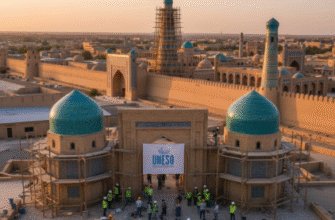
The economics are brutal, turns out. A basket that takes six hours to weave sells for maybe 150,000 som (around $12 USD), and that’s if you can find a buyer who values handcraft over the machine-made imports from China that cost half as much. Rustam mentioned, almost casually, that his daughter studies computer programming in Tashkent and has zero interest in learning this skill, and he said it without any emotion at all, just stated it as fact. The demonstration programs—usually funded by UNESCO cultural preservation grants or tourism boards—pay craftspeople to show up and work in public spaces, which helps, but it’s not exactly a sustainable career path for the next generation.
The Willow Trees That Make This Whole Thing Possible, Except When They Don’t
Nobody talks enough about the materials. Uzbek basket weavers prefer willow from trees grown along irrigation channels in the Zerafshan Valley, harvested in early spring when the sap is running but before the leaves fully emerge. Climate shifts have made the harvest timing less predictable—Fatima mentioned springs arriving two weeks earlier than they did when she started weaving thirty years ago, which throws off the whole cycle. The willow needs to be flexible but not weak, and that’s a narrow window that’s getting narrower. Some weavers have started experimenting with willow from other regions, even importing it, which feels deeply wrong to the traditionalists but also, like, what choice do they have?
During one demonstration, a kid asked Rustam how long it takes to learn this craft, and Rustam looked at his hands for a long moment before saying “all your life.” Which sounds dramatic but also he wasn’t being dramatic—he was just describing the reality that you can definately learn the basic over-under technique in a few months, but understanding which willows to select, how to read the weather for drying times, how to adjust tension for different basket sizes, that takes decades. You either commit to that learning curve or you don’t, and most people understandably don’t.
I left Bukhara with a small bread basket I probably overpaid for, and every time I use it I think about Rustam’s hands and whether anyone will be doing these demonstrations in twenty years, and honestly I don’t know the answer to that.