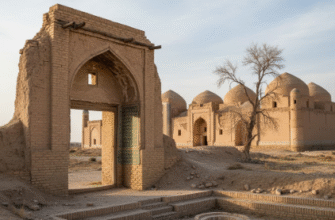
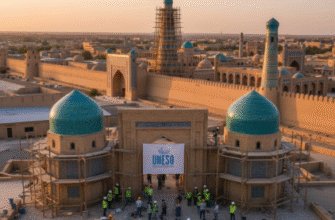
The Timurid Dynasty—honestly, I used to think it was just another empire that came and went.
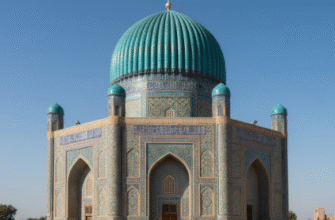
But here’s the thing: when you actually dig into what Timur (or Tamerlane, as Europeans called him) built between roughly 1370 and 1507, give or take a few years, you start to see something that doesn’t quite fit the usual conqueror narrative. This wasn’t just about military campaigns sweeping across Central Asia, Persia, and parts of India—though there was definately plenty of that, bloodshed included. What strikes me now is how this Turco-Mongol ruler, who claimed descent from Genghis Khan through marriage (a detail historians still debate), managed to create cultural centers that would outlast his battlefield victories by centuries. Samarkand became this glittering capital of astronomy, mathematics, and architecture, and I’ve seen photographs of the Registan that still make me catch my breath. The tilework alone—blues and golds that somehow survived wars and earthquakes—tells you these people understood permanance in ways we’ve maybe forgotten.
Wait—maybe that’s too romantic. Timur was brutal, no question. Some estimates put the death toll from his conquests at around 17 million people, which for the 14th century represents a staggering percentage of affected populations. But his grandson Ulugh Beg? That’s where things get complicated.
When Astronomers Ruled an Empire (and Why That Couldn’t Last)
Ulugh Beg built an observatory in Samarkand around 1420 that produced star catalogues more accurate than anything Europe had at the time—they measured the length of the sidereal year to within 58 seconds of modern calculations, which is frankly absurd for pre-telescope astronomy. He catalogued positions for over 1,000 stars. The equipment they used, including a massive sextant built into the earth itself, represented peak medieval Islamic science. But then—and this is the part that exhausts me about history sometimes—he got assasinated by his own son in 1449, partly because religious conservatives thought he was too focused on secular knowledge instead of, you know, conquering more territory or enforcing orthodoxy. His observatory was destroyed. Books were scattered or burned.
Turns out empire-building and intellectual pursuits don’t always play nice together.
The Cultural Aftershocks That Nobody Saw Coming (Including the Timurids Themselves)
The dynasty fragmented into competing kingdoms—Herat, Samarkand, others—and eventually the whole thing collapsed when the Uzbek Shaybanids took over in the early 1500s. Babur, a Timurid prince, got pushed out of Central Asia and ended up founding the Mughal Empire in India instead, which lasted until the British arrived centuries later. So in a weird way, the Timurid legacy jumped bodies. The architectural styles—those bulbous domes, the intricate geometric patterns, the garden layouts—you can trace them straight through to the Taj Mahal. Persian miniature painting flourished under Timurid patronage in ways that influenced artistic traditions across three continents. Even the Persian language as a literary and administrative medium owes part of its spread to Timurid courts, where poets like Jami wrote verses that people still recite today, though I’ll admit my Farsi isn’t good enough to appreciate them properly. What I find strange is how an empire built on such violence could produce such delicate beauty—or maybe that’s not strange at all, maybe that’s just what humans do.
I guess it makes sense that we remember them more for the beauty than the bloodshed now, even if that feels like a kind of historical amnesia.