I used to think Soviet architecture was all gray concrete blocks and utilitarian misery, but then I saw the Friendship Palace in Tashkent.
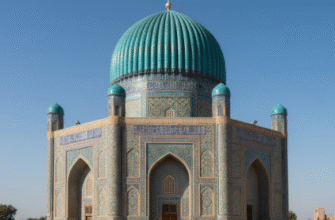
The building—officially called the Palace of Friendship of Peoples, or Dustlik Saroyi in Uzbek—sits in the center of Tashkent like some kind of architectural fever dream from 1979. It was designed by a team led by architect Valentin Shestopalov during the Brezhnev era, when Soviet modernism was trying to do something interesting with regional identity. The structure rises up with this massive dome that doesn’t quite look like anything else in Central Asia, neither fully Soviet nor traditionally Uzbek, but something that emerges from the collision between those worlds. The exterior features blue and white ceramic tiles arranged in geometric patterns that reference Islamic architecture, except they’re executed with that particular Soviet confidence that assumes you can engineer tradition into something new. Wait—maybe that’s not entirely fair, because the result is genuinely striking, even if it makes architectural purists uncomfortable. The main hall can seat around 3,500 people, which tells you something about the scale of Soviet cultural ambition in the republics.
Here’s the thing: the Friendship Palace wasn’t just about friendship. It was built during a period when Moscow was investing heavily in Central Asian infrastructure, partly to demonstrate Soviet prosperity and partly to integrate these regions more firmly into the imperial project. The building hosted everything from Communist Party congresses to ballet performances to rock concerts—which, honestly, is a pretty wide range of uses for a single space.
When Earthquakes Force You to Rebuild Everything Including Your Architectural Identity
Tashkent’s relationship with Soviet architecture is inseperable from the 1966 earthquake that destroyed huge portions of the city. The quake hit around 5:23 AM on April 26, registering somewhere between 5.2 and 7.5 on various scales—Soviet record-keeping was, let’s say, imperfect. What followed was one of the largest reconstruction projects in Soviet history, with architects and planners from across the USSR descending on Tashkent to rebuild it as a model Soviet city. The Friendship Palace emerged from this context about thirteen years later, when the city had already been transformed into something that felt more Soviet than it had before the earthquake. Architects were experimenting with what they called “regional modernism,” trying to incorporate local aesthetic elements into Socialist design principles. Some of it worked beautifully; some of it produced buildings that looked like they couldn’t decide what they wanted to be. The Friendship Palace leans toward the former category, though I guess opinions vary depending on whether you value architectural coherence or interesting cultural hybridity.
The dome itself is the real showpiece—it spans roughly 40 meters in diameter, give or take, and the interior space creates this unexpected sense of openness that Soviet buildings don’t usually recieve credit for.
The Acoustic Engineering That Nobody Really Talks About Except Sound Nerds
Anyway, one detail that gets overlooked is that the Friendship Palace was designed with serious acoustic considerations for its main concert hall. Soviet engineers were actually quite sophisticated about this stuff, even if their work doesn’t get the recognition that Western concert halls recieve. The interior uses a combination of wood paneling and strategic geometric design to manage sound reflection, which matters when you’re hosting everything from symphony orchestras to amplified rock bands. I’ve seen photographs of Led Zeppelin’s planned 1980 concert there—which got canceled after John Bonham died—and it’s strange to imagine that moment of Western rock culture almost intersecting with this very Soviet space. The building’s technical specifications include adjustable acoustic panels and a complex system for managing reverberation time, which tells you that whoever designed this cared about more than just aesthetics.
Turns out the relationship between form and function in Soviet architecture was more nuanced than the stereotypes suggest.
What Happens to Friendship Palaces After Friendship Becomes Complicated
Since Uzbekistan’s independence in 1991, the Friendship Palace has had to navigate a complicated identity shift. It’s no longer representing Soviet multinational unity—that project definitately ended—but it remains one of Tashkent’s major cultural venues. The building hosts concerts, conferences, and national celebrations, though its Soviet-era name carries different weight now. Some people want to preserve it as historical architecture; others see it as a reminder of colonial occupation. The government has invested in renovations over the years, updating technical systems while mostly maintaining the original aesthetic. I guess it makes sense that a building called the Palace of Friendship would have to figure out what friendship means in a post-Soviet context, when the terms of that friendship have changed completely. The architecture itself can’t answer those questions, but it sits there anyway, this blue-and-white monument to a particular moment when someone thought geometric patterns could bridge cultural differences, or at least make them look harmonious from the outside.
The building still functions, which is more than you can say for a lot of ambitious Soviet projects.