I’ve crossed into Uzbekistan three times now, and each border felt like stepping into a different century.
The thing about Uzbekistan’s border crossings is that they’re not just geographical lines—they’re time capsules, bureaucratic puzzles, and sometimes genuinely surreal experiences depending on which neighbor you’re coming from. The country shares borders with five nations: Kazakhstan to the north and west, Kyrgyzstan and Tajikistan to the east, Afghanistan to the south, and Turkmenistan to the southwest. Each crossing has its own personality, its own rhythm, its own peculiar set of rules that seem to change based on who’s working that day. I used to think borders were pretty straightforward—you show your passport, answer a few questions, maybe pay a fee, and you’re through. Turns out, Uzbekistan’s crossings operate on a different logic entirely, one that blends Soviet-era infrastructure with modern security concerns and a healthy dose of Central Asian unpredictability.
The Kazakhstan Crossings: Where Soviet Infrastructure Meets Modern Chaos
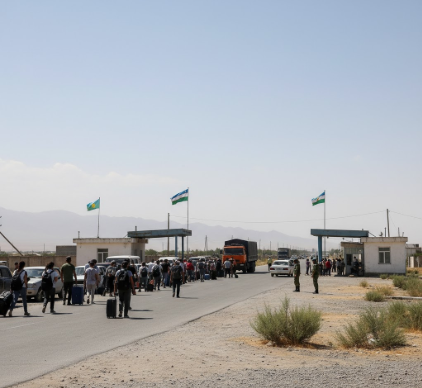
The Tashkent-Shymkent crossing at Gisht Kuprik is probably the busiest, and honestly, it’s exhausting. Thousands of people cross daily—traders hauling goods, families visiting relatives, tourists like me trying to figure out which line we’re supposed to be in. The infrastructure here is relatively modern, upgraded in the last decade or so, but the systems are definitly old-school. You’ll wait in one line for document checks, another for customs declaration, maybe a third if they decide your luggage looks interesting. I watched a guy argue with customs officials for forty minutes over a carton of cigarettes once. He lost.
What strikes me about the Kazakhstan border is the contrast—gleaming new buildings sitting alongside crumbling Soviet checkpoints. The Chernyaevka-Zhibek Zholy crossing further west handles less foot traffic but more commercial vehicles. Trucks line up for kilometers sometimes, drivers sleeping in their cabs, waiting for clearance that might come in hours or days. The border guards here tend to be more relaxed than at the main crossing, though that might just be because they’re more bored.
Eastern Approaches: Kyrgyzstan and Tajikistan’s Mountain Gateways
Here’s the thing about crossing from Kyrgyzstan—it can be weirdly pleasant or absolutely maddening depending on which crossing you choose and when you arrive. The Dustlik crossing near the Fergana Valley sees massive crowds, especially during market days when traders move between Osh and Andijan. I crossed here on a Tuesday morning thinking I’d beat the rush, but there were still hundreds of people pressed into a corridor that felt designed for maybe fifty. Someone’s grandmother elbowed me in the ribs fighting for position. No apology.
The Tajik borders are… complicated.
Political tensions mean some crossings close periodically, and the infrastructure at places like Oybek can feel provisional, temporary, like someone might dismantle it overnight. I’ve heard stories—maybe apocryphal, maybe not—of travelers waiting six hours only to be told the computer system crashed and they should come back tomorrow. The landscape here is stunning though, these mountain passes that make you understand why the Silk Road traders chose these routes centuries ago. Worth the bureaucratic headaches? I guess it depends on your tolerance for uncertainty. The guards at the Tajik crossings tend to be young, often barely out of their teens, trying to project authority while clearly still figuring out the job themselves. They once made me unpack my entire bag to inspect a book I was carrying—a novel, not even anything political—then waved me through without actually looking at it.
Southern and Western Frontiers: Afghanistan’s Closed Door and Turkmenistan’s Enigmatic Threshold
The Afghan border is essentially closed to casual travel, which probably doesn’t surprise anyone paying attention to regional security. The Termez crossing exists primarily for humanitarian aid, military logistics, and carefully vetted commercial traffic. I’ve never crossed here myself, but I talked to an aid worker who described it as “layers upon layers of checkpoints, each one asking the same questions in slightly different ways.” Not somewhere you wander through on a backpacking trip.
Turkmenistan’s crossings—Alat and Farap being the main ones—operate according to Turkmen logic, which is to say, opaque and unpredictable. Turkmenistan has some of the strictest visa requirements in the world, so most travelers never even attempt these crossings. Those who do report a strange mix of efficiency and paranoia: modern scanners and biometric systems alongside officials who want to know why you have two novels in your bag instead of one. A friend crossed at Alat last year and said the whole thing took twenty minutes; another tried three months later and spent four hours in secondary inspection because his visa letter had a smudged signature. Both were telling the truth, I think—that’s just how it works there.
Wait—maybe the real story isn’t the crossings themselves but what they reveal about Uzbekistan’s position in Central Asia. Wedged between authoritarian Turkmenistan, unstable Afghanistan, sometimes-tense Tajikistan, more open Kazakhstan and Kyrgyzstan, the country’s borders reflect these relationships. Some crossings feel like they’re trying to welcome you; others feel like they’re tolerating your presence. The infrastructure tells its own story: where money flows (Kazakhstan border upgrades), where tensions simmer (Tajik crossings), where isolation reigns (Turkmenistan’s fortress-like checkpoints). I used to see borders as simple lines, but these crossings taught me they’re more like membranes—sometimes permeable, sometimes rigid, always revealing something about the nations they separate and connect.