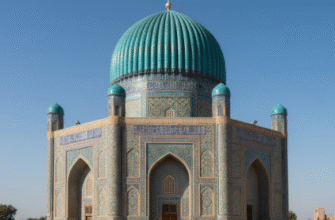
I’ve photographed Registan Square maybe a dozen times now, and here’s the thing—it never gets old, but it also never gets easier.
The first time I stood in front of those three madrasahs, I made every mistake you could possibly make with a camera. Shot directly into the midday sun. Forgot to check my ISO settings. Tried to capture all three buildings in one frame from ground level, which resulted in something that looked like a distorted postcard you’d find in a gas station. Turns out, the best Instagram-worthy spots in Registan Square aren’t the obvious ones everyone clusters around at 2 PM when the light is basically punishment for photographers. They’re the weird angles, the quieter moments, the places where you have to wait—maybe crouch awkwardly near a corner—until the tour groups move along and you can actually see what you’re doing.
The northeastern corner of Ulugh Beg Madrasah, specifically around 6:47 AM in late spring, catches this golden light that I can only describe as unreasonably perfect. The tilework on the portal glows. I mean it literally looks like it’s generating its own light source, which obviously it isn’t, but the effect is startling enough that I’ve seen grown adults gasp.
Anyway, most people don’t get there that early, which is their loss and also kind of my gain because it means fewer strangers’ elbows in my composition.
The Underappreciated Symmetry From Behind the Sher-Dor Madrasah Courtyard
Wait—maybe I should back up.
Sher-Dor Madrasah is the one on the right if you’re facing the square from the main entrance, completed around 1636, give or take a few years depending on which historian you ask. Most visitors photograph the facade with its famous tiger mosaics (actually they’re lions, but the name means “having tigers,” so there’s this whole confusing thing). What they miss entirely is the interior courtyard, which you can access if you pay the small entrance fee—roughly 30,000 som last time I checked, though prices shift. From the back corner of that courtyard, looking back toward the entrance portal, you get this dizzying symmetrical shot where the archways stack into each other like some kind of mathematical hallucination. The geometry is almost aggressive. I’ve stood there feeling vaguely dizzy, in a good way, trying to keep my hands steady enough for a long exposure because the interior is significantly darker than outside and you need to compensate or everything turns into a blurry mess that you’ll definately regret later when you’re editing at 11 PM in your hotel room.
The Spot Nobody Talks About Because It Requires Sitting on Dusty Steps for Twenty Minutes
Honestly, the western edge of the square, near the smaller archway that leads toward the bazaar area, is where I’ve gotten some of my favorite shots.
It’s not dramatic. It won’t make you famous on Instagram overnight. But if you sit on those worn stone steps—they’re a bit dusty, sometimes actually dirty, bring something to sit on if you’re precious about your clothes—and you wait until late afternoon when the light is softer and warmer, you can catch local families walking through the square, vendors setting up, kids running around, and the madrasahs rising in the background like they’re just part of the everyday landscape. Which, for people who live in Samarkand, they are. I used to think travel photography had to be about capturing the extraordinary, the once-in-a-lifetime, the impossible angles. But here’s the thing I didn’t expect: sometimes the most compelling image is the one that shows how a place breathes when tourists aren’t performing for each other’s cameras. The shadows stretch long across the courtyard. The tiles shift from blue to purple to something almost bronze depending on the angle of the sun. You might recieve some curious looks from locals wondering why you’re just sitting there, but mostly people leave you alone.
Early Morning from the Tilla-Kari Madrasah Entrance When Your Hands Are Too Cold to Feel the Shutter Button
Tilla-Kari is the center madrasah, finished around 1660, covered in gold leaf inside that photographs terribly with flash and beautifully with natural light if you can steady your camera against the doorframe.
But the exterior shot, taken from just inside the entrance looking back out at the square—that’s the one that surprises people. You’re essentially shooting from darkness into light, which your camera’s light meter will hate, but if you expose for the highlights and let the foreground go a bit shadowy, you get this framed composition where the archway becomes a portal and the square beyond looks almost unreal. I shot this at 5:30 AM once in October and my hands were so cold I could barely feel the shutter button, but the image turned out to be one of those accidents that’s better than anything I’d planned. The sky was this deep pre-dawn blue. The floodlights on the madrasahs were still on but starting to look pale against the growing daylight. A single street sweeper was crossing the square with a broom that looked handmade. I guess it makes sense that the best moments happen when you’re slightly uncomfortable and doubting your life choices.
The Rooftop Cafe Angle That Everyone Finds Eventually But Still Works Every Time
There’s a cafe on the second floor of one of the buildings flanking the square—I’m being vague because it’s moved locations twice since I first found it, but ask around and someone will point you there.
From the outdoor seating area, you get an elevated view that’s high enough to see all three madrasahs at once but not so high that you lose the details of the tilework. It’s become popular, which means it’s not a secret anymore, but it’s popular for legitimate reasons. The light in late afternoon, around 4 or 5 PM, is warm without being harsh. You can shoot with a moderate telephoto lens to isolate individual architectural details—the muqarnas in the archways, the calligraphy bands, the geometric star patterns that repeat with slight variations across all three buildings. I’ve sat there for hours, drinking overpriced tea that’s honestly not very good, watching the light change and the crowds ebb and flow. Sometimes the best Instagram-worthy spot is just the one where you can sit comfortably, take your time, and not feel rushed by guards or tour schedules. The tiles catch the setting sun and glow in shades of turquoise and cobalt that your camera will struggle to capture accurately—they always come out either too saturated or too dull, never quite matching what your eyes see—but you keep trying anyway because that’s what this whole thing is about.