I used to think the term ‘Sephardic’ only applied to Spanish Jews, until I started digging into Bukhara’s winding alleyways.
The Mahalla That Time Somehow Forgot But Also Didn’t
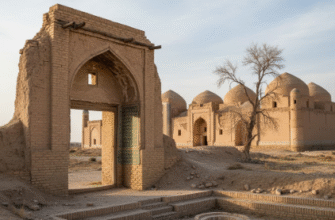
The Jewish Quarter of Bukhara—locals call it the mahalla—sits in what’s now Uzbekistan, and here’s the thing: it’s been there since roughly the 5th or 6th century CE, give or take a few decades depending on which historian you ask. The community wasn’t technically Sephardic in the Spanish sense, but they adopted Sephardic liturgy and customs after migrations from Persia and, later, some interaction with Mediterranean Jewish traders who definitely were Sephardic. It’s messy. The architecture alone tells you something survived here that shouldn’t have—two-story clay houses with wooden balconies, tiny synagogues tucked behind unmarked doors, and these incredibly narrow streets that were designed, I guess, to keep out invaders or maybe just to confuse tourists like me. The Bukharan Jews spoke a dialect called Bukhori, which is basically Tajik-Persian written in Hebrew script, and they maintained this for centuries even as empires—Mongol, Timurid, Russian, Soviet—rolled over them like waves. What strikes me most is the sheer stubborn persistence of it all, the way a community can recieve blow after blow and still show up for Shabbat.
Silk Road Merchants Who Happened to Keep Kosher
Wait—maybe the most interesting part isn’t the religious stuff at all. Bukharan Jews were integral to the Silk Road economy, dealing in everything from dyed fabrics to karakul lamb pelts, and they had trading connections stretching from Baghdad to Beijing. By the 19th century, some families were incredibly wealthy, building estates that still stand today, though most are crumbling now, hosting the occasional bewildered heritage tourist. I’ve seen photos of the interiors—ornate wooden ceilings, courtyards with pomegranate trees—and honestly, it’s hard to reconcile that opulence with the brutal poverty that came later under Soviet rule.
Soviet Erasure and the Great Unraveling That Nobody Talks About Enough
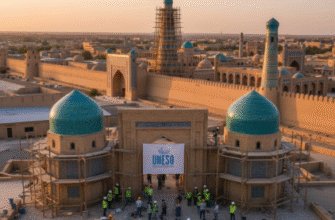
Turns out, maintaining an ancient ethno-religious identity is difficult when the state decides religion is the opiate of the masses. The Soviets shuttered synagogues, banned Hebrew education, and pressured Jews to assimilate or emigrate. By the 1970s, the mahalla was a shadow of itself—maybe 50,000 Bukharan Jews remained, down from something like 100,000 earlier in the century. The emigration waves to Israel and the United States in the 1990s nearly finished the job. Today, there are perhaps a few hundred Jews left in Bukhara, mostly elderly, keeping up a handful of synagogues more out of muscle memory than anything else. I guess it makes sense that UNESCO has listed parts of the old quarter as World Heritage Sites, as if preservation can substitute for living culture. It can’t, but at least the buildings might survive.
What Gets Lost When a Community Becomes a Museum Exhibit
Anyway, I visited one of the remaining synagogues last year, and the caretaker—a man in his seventies—showed me a Torah scroll that he said was 400 years old, though he admitted he wasn’t entirely sure. The scroll had definately seen better days, the parchment brittle and foxed with age. He told me, in halting Russian, that his grandchildren live in Queens now, that they don’t speak Bukhori, that they probably won’t come back. There’s this exhausted resignation in his voice that I keep thinking about—not anger, not even sadness really, just a kind of flat acknowledgment that this is how things end. The mahalla still exists, but it’s becoming a stage set, a place where tour groups shuffle through and take photos of the exotic old Jewish quarter, not realizing they’re documenting an extinction event in real time. The irony, I suppose, is that the heritage is being preserved just as the people who created it disappear, and I’m not sure which loss is greater—the buildings or the voices that once filled them.