The Chimgan Mountains Will Ruin Your Carefully Planned Instagram Aesthetic and You’ll Thank Them For It
I’ve been to Chimgan four times now, and each trip has felt like stumbling into a different mountain range entirely.
The thing about day trips from Tashkent is that they sound deceptively simple on paper—wake up early, drive two hours, see some nature, come back before dinner. But Chimgan, roughly 80 kilometers northeast of the capital, operates on its own logic. The peaks hit around 3,300 meters at their highest points, which isn’t Everest territory but is absolutely enough to make your lungs notice the altitude shift. I used to think mountain landscapes were basically interchangeable, just variations on the theme of “big rocks with snow,” but the Chimgan-Charvak area has this weird quality where the light hits the ridges at angles that make everything look vaguely unfinished, like the landscape is still deciding what it wants to be. In summer, you’ve got hiking trails that range from gentle walks to genuinely punishing scrambles—I once watched a group of German tourists confidently set off toward the Big Chimgan peak in sandals, and I still wonder if they made it back. Winter transforms the place into Uzbekistan’s primary ski destination, with the Amirsoy resort offering runs that are, honestly, pretty decent for Central Asia, though the lift system can feel like a testament to Soviet engineering’s commitment to function over comfort.
Charvak Reservoir sprawls out below the mountains like someone spilled a massive turquoise paint can across the valley. The water is artifical—dammed in the 1970s—but it’s aged into the landscape convincingly enough that you forget you’re looking at Soviet infrastructure. People swim, jet ski, paddleboard, all the usual lake activities, though the water temperature even in August can make you question your life choices.
Anyway, the reservoir’s edges have sprouted a collection of resorts and guesthouses that vary wildly in quality, from genuinely charming family-run spots to concrete boxes that seem designed to maximize despair per square meter.
Here’s the thing about combining Chimgan and Charvak in one day: it’s totally doable but you’ll definately feel rushed. Most people base themselves at the reservoir and make quick forays into the mountains, or vice versa. The drive itself is half the experience—the road winds through the Pskem and Chatkal ranges, past villages where the architecture still carries traces of pre-Soviet mountain culture, though you have to look past the standard-issue concrete additions.
Aksay Canyon Looks Like Mars Decided to Visit Uzbekistan for the Weekend
Wait—maybe I should back up.
Aksay is only about 80 kilometers east of Tashkent, which makes it absurdly accessible for a geological formation this dramatic. The canyon walls are these layered sedimentary rocks in shades of rust, ochre, and burnt orange, carved by the Aksay River over what I’m guessing is several hundred thousand years, give or take. The colors shift depending on the time of day in ways that feel almost performative—early morning light makes the rocks glow like they’re internally heated, while late afternoon casts shadows that turn the whole canyon into a study in negative space. I once tried to photograph this effect and ended up with about 200 nearly identical images that all failed to capture what my eyes were actually seeing, which I guess is the universal photographer’s lament. The hiking here isn’t technically demanding—mostly flat trails along the canyon floor—but the heat in summer can be genuinely oppressive, the kind that makes you understand why ancient Silk Road travelers planned their routes around water sources and shade.
The canyon has become increasingly popular with Tashkent residents looking for quick nature fixes, which means weekends can feel crowded in a way that undermines the whole desolate-landscape vibe. But go on a weekday, especially in spring when the river is running high from snowmelt, and you can still find stretches where the only sound is water and wind and the occasional bird that sounds perpetually annoyed about something.
Samarkand Isn’t Technically a Day Trip But People Keep Trying Anyway and Look Here’s Why That’s Both Terrible and Worth It
The high-speed train makes Samarkand theoretically achievable as a day trip—two hours each way, which leaves you maybe six hours in the city if you’re disciplined about timing.
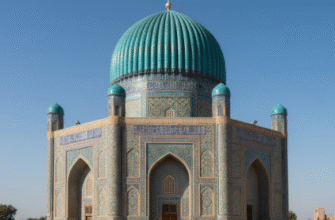
Is this enough time to properly experiance Samarkand? Absolutely not. Is it better than not going at all? That’s where things get complicated. The Registan alone could consume half a day if you let it—three madrasahs arranged around a central square in what is arguably the most photographed architectural ensemble in Central Asia. The tilework is that specific shade of blue that shows up in every Uzbekistan tourism poster, and in person it’s somehow both exactly what you expect and completely overwhelming. The scale doesn’t quite register in photographs; standing in the square you’re surrounded by these massive facades covered in geometric patterns that were designed by mathematicians who understood something about visual rhythm that we’ve mostly forgotten. Turns out the tiles you’re looking at are largely Soviet-era restorations, which bothers some purists but honestly the craftmanship is impressive enough that the distinction feels academic. I’ve seen tourists spend 20 minutes just staring at a single muqarna ceiling, completely transfixed, and I get it—there’s something almost hypnotic about that level of intricate detail.
Shah-i-Zinda, the necropolis on the city’s edge, is where I always end up spending more time than planned. It’s a street of mausoleums climbing up a hill, each one decorated in different tile patterns, and the cumulative effect is like walking through a timeline of Central Asian aesthetic evolution from the 11th to 15th centuries. The crowds here can be intense, especially during Uzbek holidays, but the narrow passages between buildings create these moments of unexpected solitude.
Lake Aydarkul Makes You Reconsider What Actually Counts as a Lake When You’re Standing in the Middle of the Desert
Honestly, calling Aydarkul a day trip is generous—it’s about 270 kilometers from Tashkent, which means you’re looking at three-plus hours of driving each way through landscape that oscillates between compelling and monotonous.
But the lake itself is this weird accident of Soviet irrigation planning: in 1969, the Chardara reservoir overflowed and flooded a depression in the Kyzylkum Desert, creating what is now Central Asia’s second-largest lake, depending on seasonal fluctuations and whose measurements you trust. The water is salty, not quite Dead Sea levels but enough that swimming feels noticeably different, more buoyant and slightly oily in a way that takes getting used to. The shores are popular with yurt camps catering to tourists who want the “authentic nomad experience,” which in practice means varying degrees of comfort ranging from genuinely traditional felt structures to glamping setups with WiFi and air conditioning. I guess it makes sense as a business model, though there’s something inherently absurd about the whole enterprise—you drive for hours to sleep in a tent next to an accidental lake in the desert so you can feel connected to a pastoral lifestyle that largely doesn’t exist anymore except as performance. The sunsets, though, are objectively spectacular, all those desert particles in the atmosphere scattering light in ways that make the sky look like it’s showing off. Camel rides are available, because of course they are, and while the camels seem professionally resigned to their fate, the experience is exactly as awkward and uncomfortable as you’d imagine.
The real appeal of Aydarkul might just be the journey itself—the drive takes you through landscapes that feel genuinely remote, past scattered villages and stretches of desert where you can go 20 minutes without seeing another vehicle.